

Ken Griffin is one of the most influential financiers of the 21st century. As the founder and CEO of the hedge fund Citadel, he combines a sharp analytical mind, a deep understanding of the markets, and entrepreneurial intuition. His firm is one of the most powerful players in the global financial arena, and Griffin himself is a figure who has repeatedly influenced the course of financial history. You can also learn about the success story of American animation legend Walt Disney. More to come on chicagovski.
Biography and Early Life
Ken Griffin was born on October 15, 1968, in Daytona Beach, Florida, into a middle-class family. His grandfather was a financier, and his father worked in real estate and education, factors that likely sparked Ken’s interest in economics from an early age. The young Griffin showed an aptitude for quantitative fields and analytics—he was fascinated by computer games, programming, and mathematics, and by high school, he was already tracking the stock markets. After graduating from high school in Boca Raton, Griffin enrolled at Harvard University, choosing economics as his major. This is where his path as an investor truly began.
After reading a Forbes article about bond arbitrage, he became intrigued by the potential profits in the securities market. To get real-time access to market data, Ken convinced the dormitory administration to let him install a satellite dish on the roof—this was in the late 1980s, long before the advent of smartphones or widespread internet. By the age of 19, he was actively trading on the exchange, utilizing arbitrage strategies in the bond market. Griffin created his first small hedge fund, raising about $265,000 from relatives, friends, and professors. He soon showed significant returns, even managing to profit despite the market crash of 1987.
This success attracted the attention of renowned investor Frank Meyer, the founder of Glenwood Capital, who was impressed by the young trader’s discipline, mindset, and profitability. Meyer offered Griffin $1 million to launch a new fund. This investment proved to be a turning point: Ken Griffin received not only capital but also the confidence of one of the most authoritative financiers of the time.
The Rise of Citadel
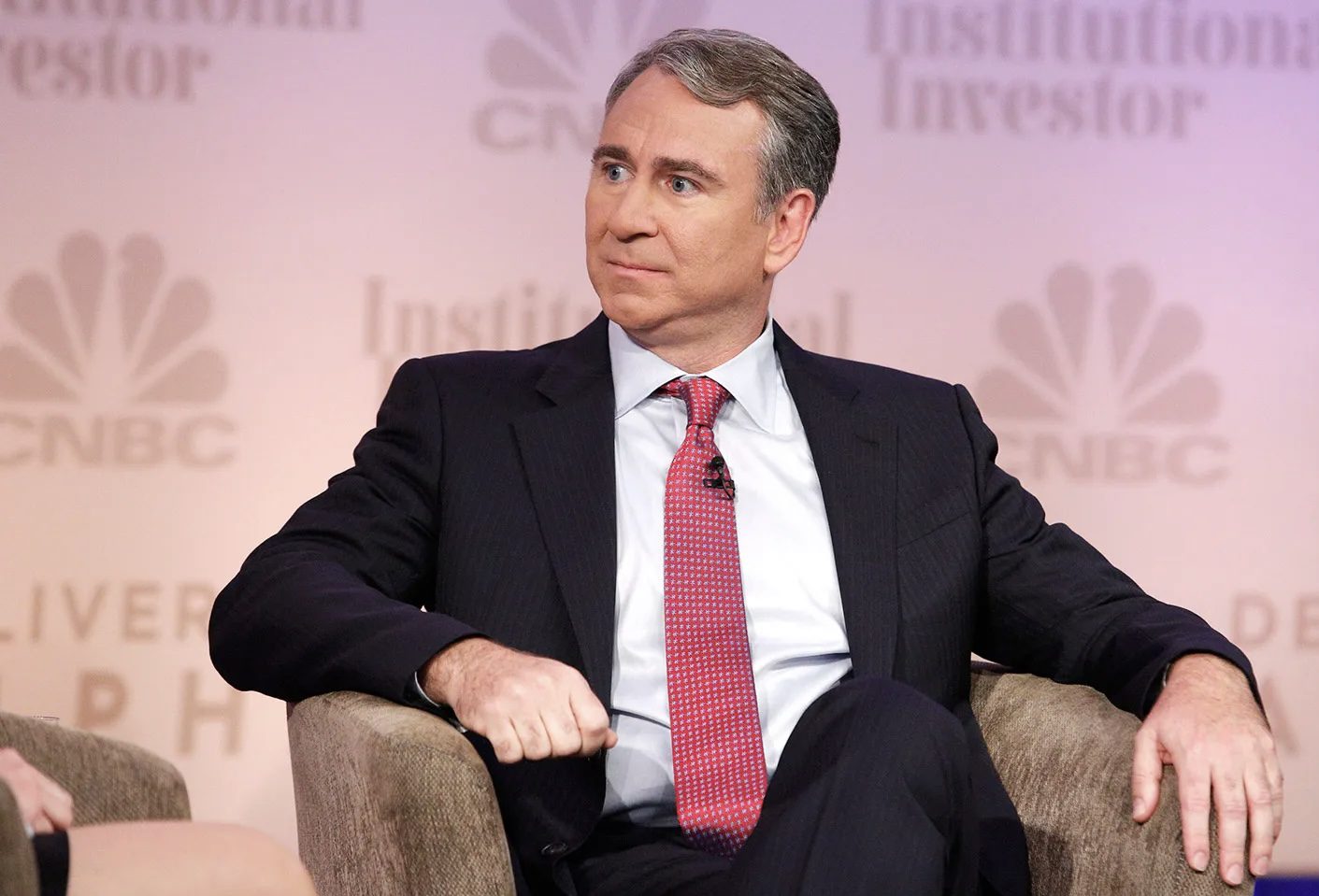
In 1990, at the remarkably young age of 22, Ken Griffin founded Citadel—a hedge fund that would eventually become one of the most successful investment companies in the world. From its founding in 1990, Ken Griffin chose to headquarter Citadel in Chicago. This was a significant development for the city: the emergence of a high-tech hedge fund on Chicago’s financial map established it as a hub for financial innovation. Over the years, the company created thousands of jobs, invested in infrastructure, and built Chicago’s reputation as a city with a robust financial ecosystem. As of 2025, Citadel’s assets under management exceed $60 billion. Citadel specializes in high-frequency trading, arbitrage, credit, and equity strategies. Its infrastructure relies on cutting-edge technology, mathematical models, and artificial intelligence. The firm’s success is often attributed to the combination of Griffin’s financial intuition and his team’s technical excellence.
A separate division is Citadel Securities, a leading market maker that handles approximately 40% of all retail stock trades in the U.S. Following the market disruptions of 2008–2009, this company provided essential liquidity when other institutions were avoiding risk. During the GameStop saga in 2021, Citadel Securities found itself at the center of public discussion, as it executed many trades with Robinhood—the platform through which millions of users were buying shares. This increased scrutiny of Citadel’s crucial role in shaping the U.S. stock market.
Philanthropy and Civic Engagement
Ken Griffin is not just a financier but also a massive philanthropist. His charitable contributions exceed $2 billion. He is an active supporter of museums, scientific institutions, hospitals, and universities. Among his major donations are gifts to Harvard University ($300 million), the Metropolitan Museum of Art ($125 million), and Chicago’s Field Museum of Natural History, among others. He also funds educational initiatives, economic mobility programs, and scientific research in healthcare.
The Museum of Science and Industry Chicago received a $125 million donation from him—the largest charitable gift in the museum’s history. In 2024, in recognition of this support, the museum was renamed the Kenneth C. Griffin Museum of Science and Industry. Griffin has also invested in the development of the Art Institute of Chicago, the Lyric Opera, and other major cultural institutions in the city. Despite his generous contributions, Griffin has been outspoken about his concerns regarding Chicago’s social environment. He has repeatedly criticized Chicago’s city government over rising crime rates and political instability.
In 2022, this criticism led to a major decision: Griffin announced the relocation of Citadel’s headquarters to Miami, citing an “intolerable environment for business and life.” The move was seen as a serious blow to Chicago’s image as a business hub and was widely interpreted as a signal of lost confidence in local leadership. However, Griffin emphasized that he will continue to support city initiatives, albeit from a distance.
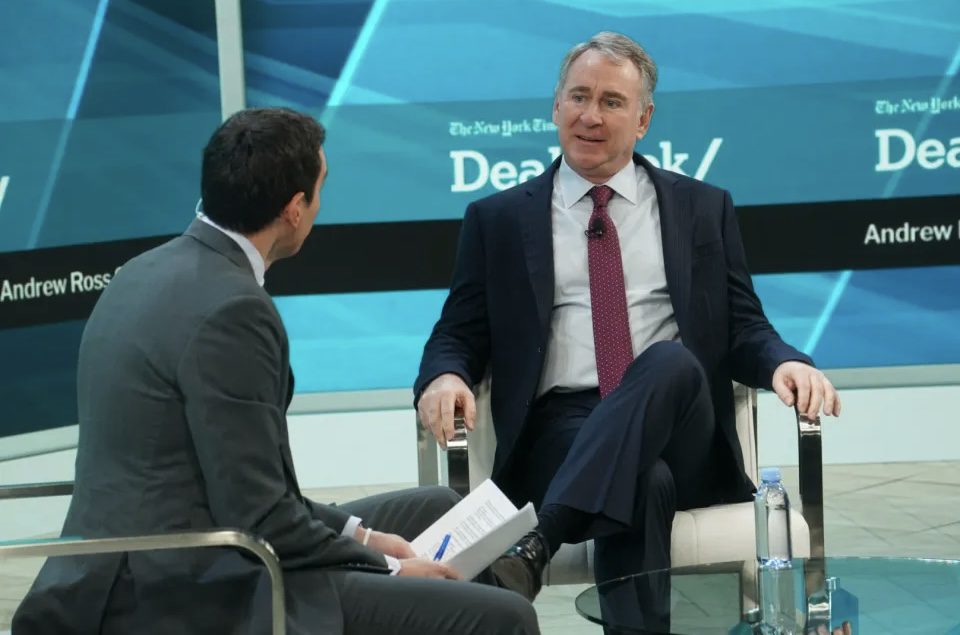
Griffin is an active participant in public discussions about financial regulation, taxation, and monetary policy. He has repeatedly spoken out against raising capital gains taxes and has supported politicians who, in his view, create a favorable climate for entrepreneurship. At the same time, he is unafraid to criticize politicians of any party when he sees risks to the economy.
As of 2025, Ken Griffin’s net worth is estimated at over $35 billion. He is listed among the world’s richest people by Forbes and maintains a leading position in the global investment community. But Griffin is more than just a billionaire. He is a symbol of a new era of finance, one where mathematics, technology, and strategic thinking shape the markets. His influence on Wall Street is immense, and without a doubt, his story is far from over.
Personal Life and Art Collection
In 2003, Ken Griffin married Anne Dias, a philanthropist, Harvard graduate, and founder of Aragon Global Management. The couple had three children and for a long time split their lives between Chicago, New York, and Florida. Together, they engaged in charitable work, invested in educational and cultural initiatives, and cultivated the image of an influential power couple. However, the marriage ended in a high-profile divorce in 2014, which drew significant attention from the American media. The couple disputed the terms of their prenuptial agreement, child custody rights, and property issues.
Another key aspect of Ken Griffin’s persona is his world-class art collecting. His collection includes masterpieces by artists such as Jackson Pollock, Willem de Kooning, Paul Cézanne, and Georges Seurat. The total value of the works he owns is estimated by the art market to exceed one billion dollars. In 2016, he acquired two paintings by Pollock and de Kooning for $500 million in a private sale—one of the largest art purchases in history. He has loaned some of the works for temporary exhibition at the Art Institute of Chicago and other museums.
Griffin’s private life is also intertwined with his political activism. He regularly finances the electoral campaigns of candidates who support liberal economic policies and limited government intervention in business. His political stance sometimes draws criticism, particularly against the backdrop of social inequality.
Also, check out the Lollapalooza Festival—one of the world’s most famous music festivals.