

He is one of the most vibrant figures in the history of baseball. He was not just an outstanding athlete—he embodied an optimism, dignity, and love for the game that made him an icon not only in Chicago but across all of America. Read more at chicagovski.
Biography
Ernie Banks was born on January 31, 1931, in Dallas, Texas, to Edward and Essma Banks. He was the second of twelve children, and the family’s life was not easy. His father worked several low-paying jobs, including as a carpenter, while his mother was a homemaker. The family lived modestly in a poor neighborhood at a time when the Great Depression and racial segregation severely limited opportunities for African Americans in the U.S., especially in the South. Despite the hardships, Ernie grew up in a loving family where education, hard work, and faith were highly valued. His father was an avid baseball fan and instilled a love for the game in his son. However, in the segregated environment, the chances for a Black boy to enter professional sports were almost nonexistent. Banks recalled that as a child, he didn’t even own a glove—he played with a ball made of string and old fabric.
In his school years, Ernie was more passionate about basketball, football, and track and field. He played for the team at Booker T. Washington High School, where he was noted for his agility and athletic discipline. Baseball remained on the back burner—the school didn’t even have a baseball team for Black students. However, his natural hitting power and quick movements caught the attention of local coaches. After graduating from high school, he briefly attended Wiley College and played on its team, where he continued to hone his skills. In 1950, at the age of 19, Ernie enlisted in the U.S. Army during the Korean War. Even in the military, he played baseball on the army team, which helped him stay in shape.
After his discharge, Ernie Banks joined the legendary Kansas City Monarchs. At the time, it was one of the strongest teams in the Negro Leagues, featuring stars like Satchel Paige and Jackie Robinson. Banks proved to be a versatile player, combining athleticism with smart, strategic play. It was during his time in the Negro Leagues that he was noticed by scouts from the Chicago Cubs, and in 1953, he signed a contract with the club, becoming the first African American player in the franchise’s history. This was a historic moment not only for Banks himself but for baseball as a whole, as he became one of the pioneers of sports integration in post-war America.
MLB Career
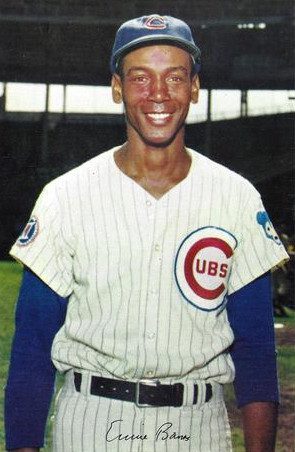
In mid-September 1953, Ernie Banks made his debut with the Chicago Cubs, becoming the first African American player in the club’s history. This was not just an athletic breakthrough but a social one—at the time, the integration of Black players into Major League Baseball (MLB) still faced resistance on many levels. However, Banks immediately established himself as a humble, energetic, and exceptionally talented player who earned the respect of his teammates and the fans.
He spent his entire professional career with the Cubs—19 seasons from 1953 to 1971—making him a symbol of dedication and loyalty. In an era when many stars moved between clubs in search of better deals, Banks remained in Chicago, even as the team went years without making the playoffs. Initially, he played shortstop, one of the most demanding defensive positions in baseball. He was known for his incredible agility, reflexes, and accurate throws. In the 1960s, due to age and tactical changes, he moved to first base but remained a key player on both defense and offense.
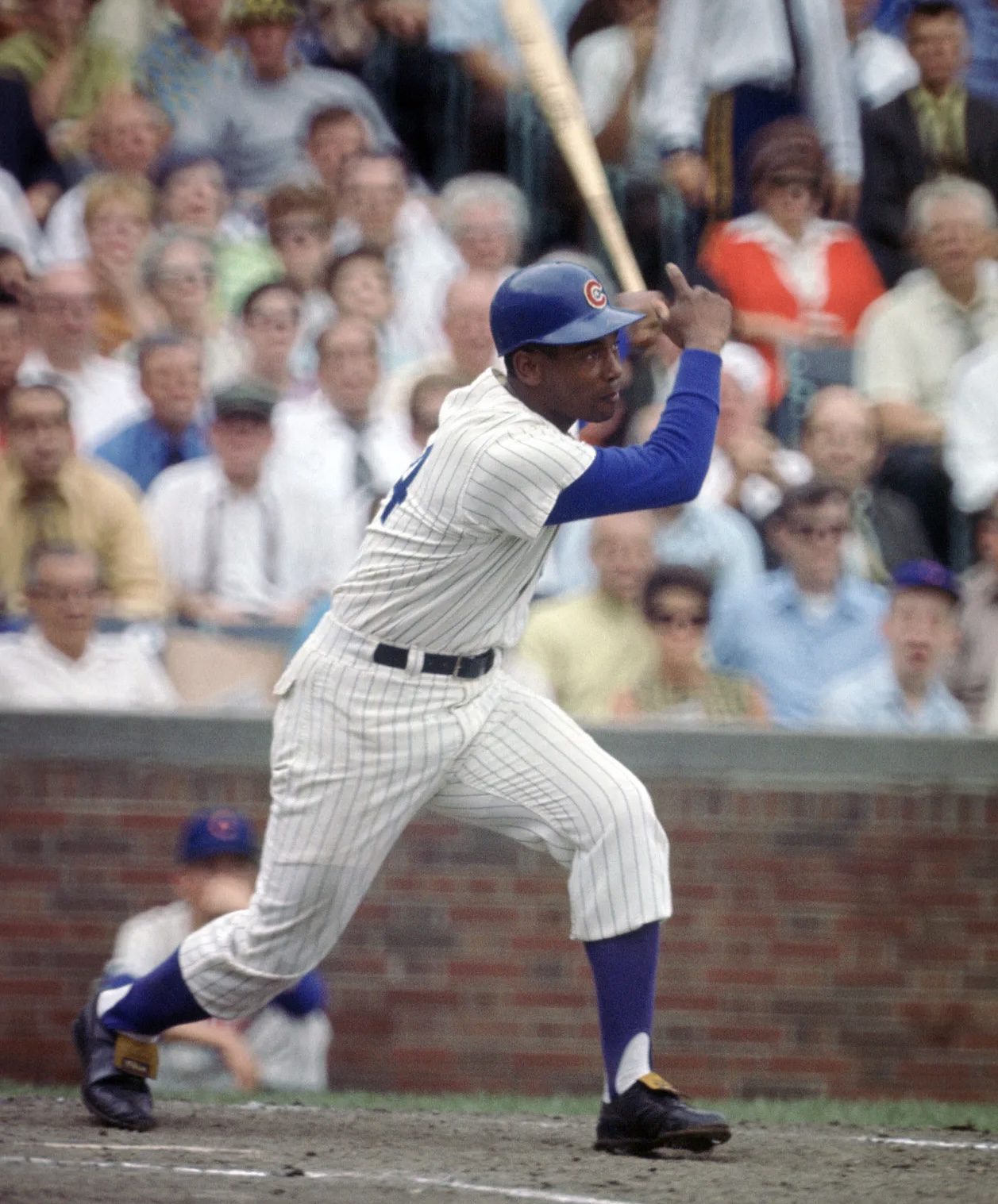
Banks was known as a powerful hitter, impressive for the force of his swings. His 512 home runs placed him among the most prolific baseball players of his time. He was twice named the National League’s Most Valuable Player (MVP), despite his team not being among the league leaders at the time.
Athletic Achievements
Among his achievements are:
- 512 home runs — one of the first African Americans to cross this threshold.
- 1,636 RBIs (runs batted in) — a key measure of run production.
- 2,583 career hits — a testament to his consistency and endurance.
- 14 All-Star Game appearances — a sign of constant recognition from the league and fans.
Banks repeatedly led the league in home runs and RBIs in various seasons. In 1955, he set a record for shortstops by hitting 44 home runs—an achievement that remained unbeaten for many years.
Despite his brilliant personal statistics, the Chicago Cubs never made it to the playoffs or the World Series during his career. However, this did not diminish Banks’s status as a legend. On the contrary, his dedication to the team through times of hardship and defeat made him a hero to Chicago fans. Banks was not just a player with record-breaking numbers—he was the face of the franchise, an embodiment of how one could remain great even when the team was not at the top.
Recognition
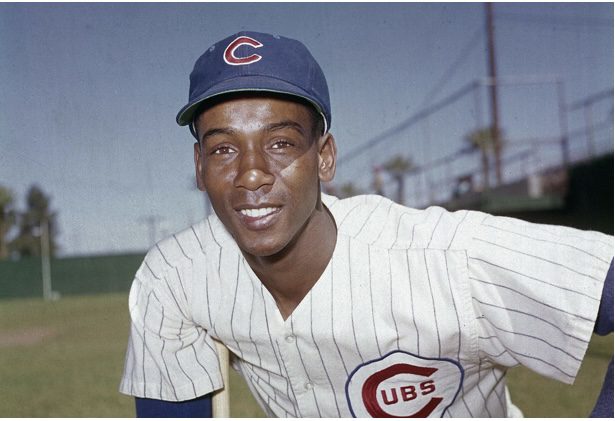
In 1977, on his first ballot, Ernie Banks was elected to the National Baseball Hall of Fame in Cooperstown, New York. This was not just recognition of an outstanding athletic career—it was a tribute to a man who embodied the ideals of American sports: fair play, hard work, respect for the opponent, and unwavering optimism.
His induction into the Hall of Fame was a historic moment for the African American community: Banks became one of the first Black players to receive this honor, paving the way for future generations. His example proved that the color of one’s skin was not enough to stop talent and character.
In 1982, the Chicago Cubs retired his jersey number, 14. It was the first time in the club’s history that a number was retired. Since then, no Cubs player has worn that number, as a sign of deep respect for Ernie.
In 2008, for the club’s 100th anniversary, a bronze statue of Ernie Banks was unveiled in front of Wrigley Field, inscribed with his famous phrase, “Let’s play two!” The statue depicts Banks in motion—bat in hand, smiling, and ready to play. It is not just a monument but an emotional centerpiece of the stadium, a place where fans meet, remember, and honor the legend.
In 2013, President Barack Obama awarded Ernie Banks the Presidential Medal of Freedom, the highest civilian honor in the United States. Banks was also inducted into numerous halls of fame, including the Negro Leagues Baseball Museum Hall of Fame and the Illinois State Hall of Fame. Baseball tournaments, streets in Chicago, and school programs are named in his honor.
A Farewell to the Athlete
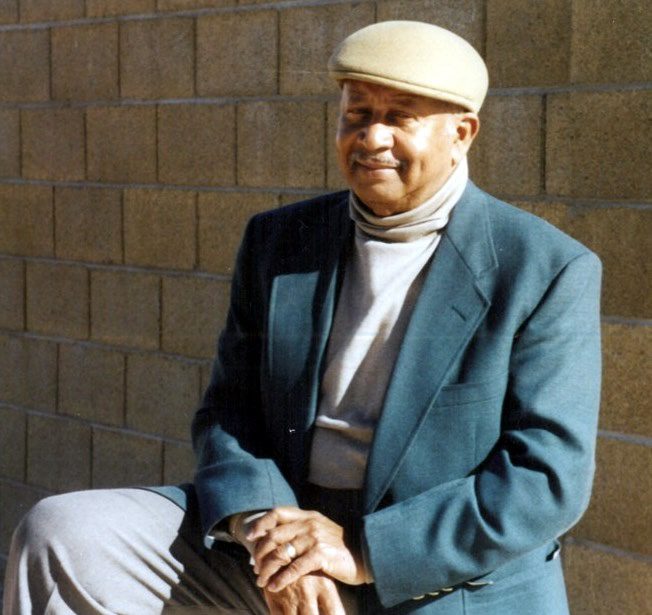
Ernie Banks passed away on January 23, 2015, in Chicago, eight days before his 84th birthday. His death was a national loss. He was honored with moments of silence at baseball games across the country. At Wrigley Field, thousands of fans brought flowers, letters, and baseballs with messages like “Thank you, Mr. Cub.” A public memorial service was held for Ernie at Chicago’s City Hall, and the mayor declared the day of his funeral “Ernie Banks Day.” The press, sports commentators, and public figures remembered him not just as a player, but as a man who always smiled, even in the darkest moments.
In the 21st century, Ernie Banks is not just a baseball legend but an embodiment of faith in a better tomorrow, faith in the game, and faith in oneself. His story is a reminder that a big heart, honesty, and a joy for life can leave a legacy stronger than any statistic.
Also learn about “The Cadillac Palace Theatre” — the home of Broadway productions.