

One of the most influential leaders of the 21st century, and the first African American President of the United States, his success story inspires millions worldwide. His journey is an example of persistence, self-belief, and a commitment to changing the world for the better. Discover the story of entrepreneur Sam Altman, who went from programmer to millionaire. More at chicagovski.
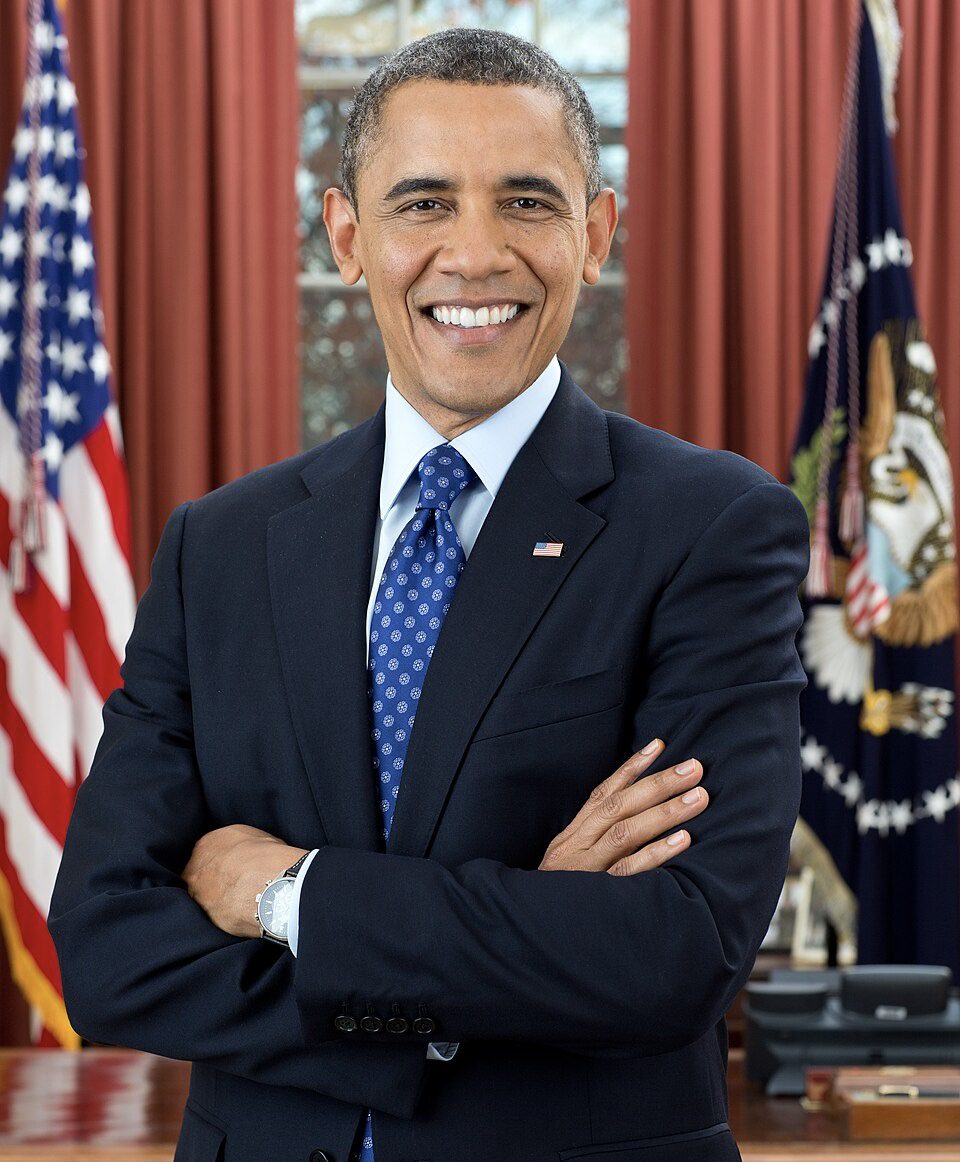
Biography
Barack Hussein Obama II was born on August 4, 1961, in Honolulu, Hawaii, into a family with diverse cultural roots. His father, Barack Obama Sr., was an economist from Kenya, and his mother, Ann Dunham, was a white American from Kansas. This multicultural background from an early age shaped his broad worldview and openness to different cultures and people. Obama grew up in Hawaii, where he spent most of his childhood, exposing him to life in a diverse environment. He also spent several years in Indonesia, living with his mother and stepfather. This experience helped him understand different social realities and strengthened his sense of empathy for people of various backgrounds. Education was a priority for Obama from his youth. He attended prestigious schools in Honolulu, where he demonstrated high academic abilities, especially in literature and social sciences. Even then, he began to show an interest in politics and social issues, reading the works of thinkers like Martin Luther King Jr. and Malcolm X. After high school, Obama moved to New York, where he enrolled at Columbia University. There, he studied political science with a focus on international relations. During this period, he was an active participant in student movements and searched for his place in the huge metropolitan world.
A decisive turn in his education came when he entered Harvard Law School—one of the most prestigious law institutions in the U.S. There, he not only earned his law degree but also became the first African American to be elected president of the “Harvard Law Review”—the student-run legal journal, which is a recognized indicator of leadership and intellectual prowess. These years were crucial for shaping Obama as a leader and thinker. He immersed himself in the study of constitutional law, social justice, and civil rights issues, which became the foundation of his subsequent political career.
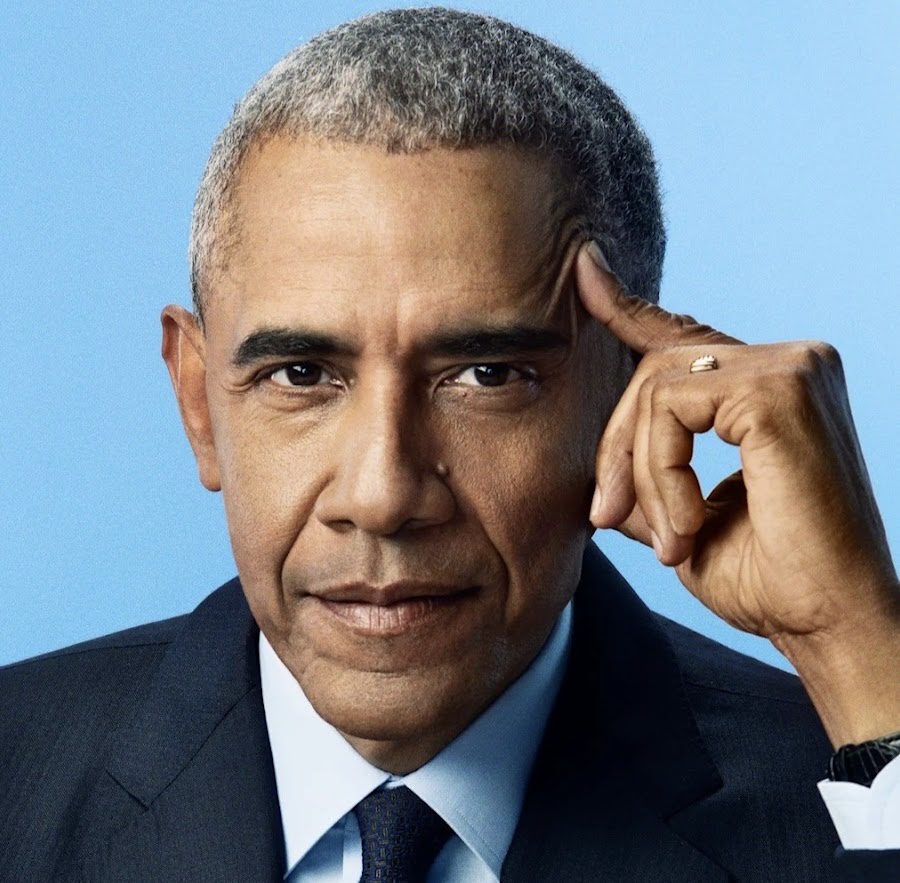
Life in Chicago
After graduating from Harvard Law School in 1991, Obama moved to Chicago. He began working as a community organizer in the South Side—poor and less affluent communities primarily inhabited by African Americans and Latinos. Here, he focused on improving housing, education, and economic support for local residents. Simultaneously, Obama worked as a lawyer at a local firm specializing in protecting workers’ rights and fighting discrimination. This experience enriched his understanding of ordinary people’s struggles and laid the groundwork for his later political platform.
In 1996, Obama was elected to the Illinois State Senate, where he worked on reforms in education, healthcare, criminal law, and local community development. Chicago became his political base, as well as the place where he gained support among various social groups and political circles. His style—pragmatic, focused on compromise, yet persistent in achieving goals—attracted the attention of national politicians, not just Illinois residents.
It was in Chicago that Obama wrote his book, “Dreams from My Father,” where he recounted his life journey, challenges, and search for identity. The book gained wide recognition and served as a catalyst for his rise in the political arena. In 2004, when he delivered his speech at the Democratic National Convention in Boston, he was already representing Illinois, and Chicago served as his headquarters and a symbol of the city where his political ideas and strategies were born. This speech was a watershed moment that paved his way to the U.S. Senate and, eventually, the White House.
Election Campaign and Presidency
Barack Obama’s breakthrough began in 2004 when he delivered the keynote address at the Democratic National Convention. His speech, filled with messages of hope, unity, and the need for change, immediately captured the nation’s attention. It served as a launching pad for his subsequent political career, making Obama a recognizable leader nationally, not just in Chicago or Illinois. Following this, Obama was elected to the U.S. Senate, where he actively worked on legislative initiatives aimed at improving healthcare, education, justice system reform, and human rights protection. He earned a reputation as a politician who could build dialogue and find compromises without abandoning his principles.
In 2008, against the backdrop of a deep economic crisis—the most serious since the Great Depression—and the ongoing war in Iraq, Obama officially announced his intention to run for U.S. President. His election campaign became one of the most massive and innovative in the country’s history. His key slogans were “Hope” and “Change,” resonating with millions of Americans tired of old political approaches and the crisis. Obama effectively utilized social media and the internet to mobilize support, engage youth, and attract small donors, which was groundbreaking at the time. His campaign focused on the need to unite the country regardless of race, class, or political views.
In November 2008, Obama won a historic victory and became the first African American President of the U.S. His election symbolized an era of change and progress for many citizens at home and around the world. During his presidency, Obama focused on overcoming the economic crisis by passing stimulus packages, reforming the healthcare system, and pursuing an active foreign policy aimed at strengthening international alliances and ending military conflicts. He also became a voice for minority rights, combating climate change, and technological development. Despite the challenges, Obama’s political style—pragmatic, open to dialogue, and new ideas—left a profound mark on U.S. political history.
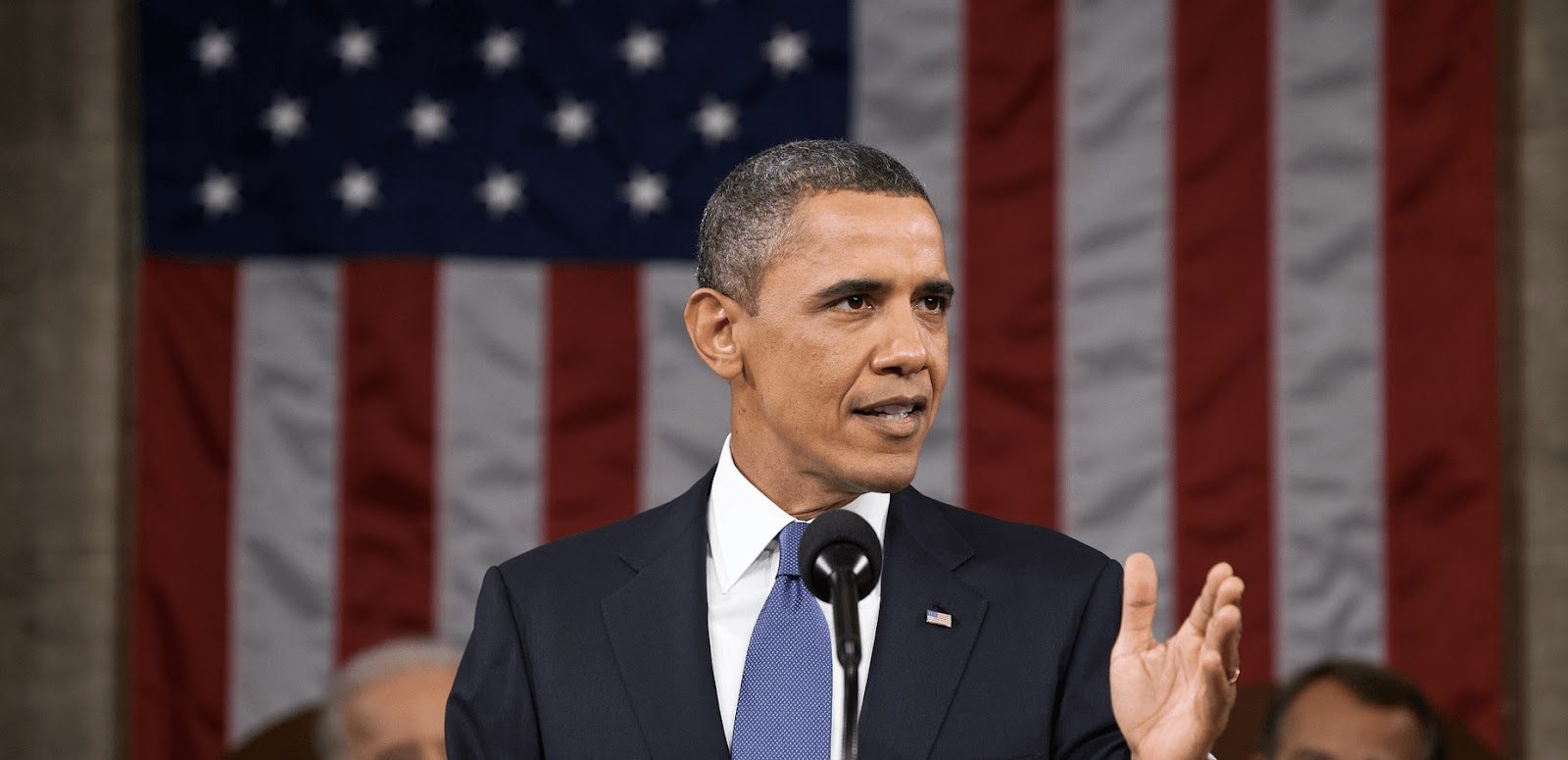
Key Presidential Achievements
During his two terms in office, Obama implemented several important reforms:
- Passing the healthcare reform law (“Obamacare”), which expanded access to medical insurance for millions of Americans;
- Withdrawing troops from Iraq and reducing military presence in Afghanistan;
- Signing agreements with other countries on nuclear security and combating climate change;
- Recovering the economy after the global financial crisis and lowering the unemployment rate.
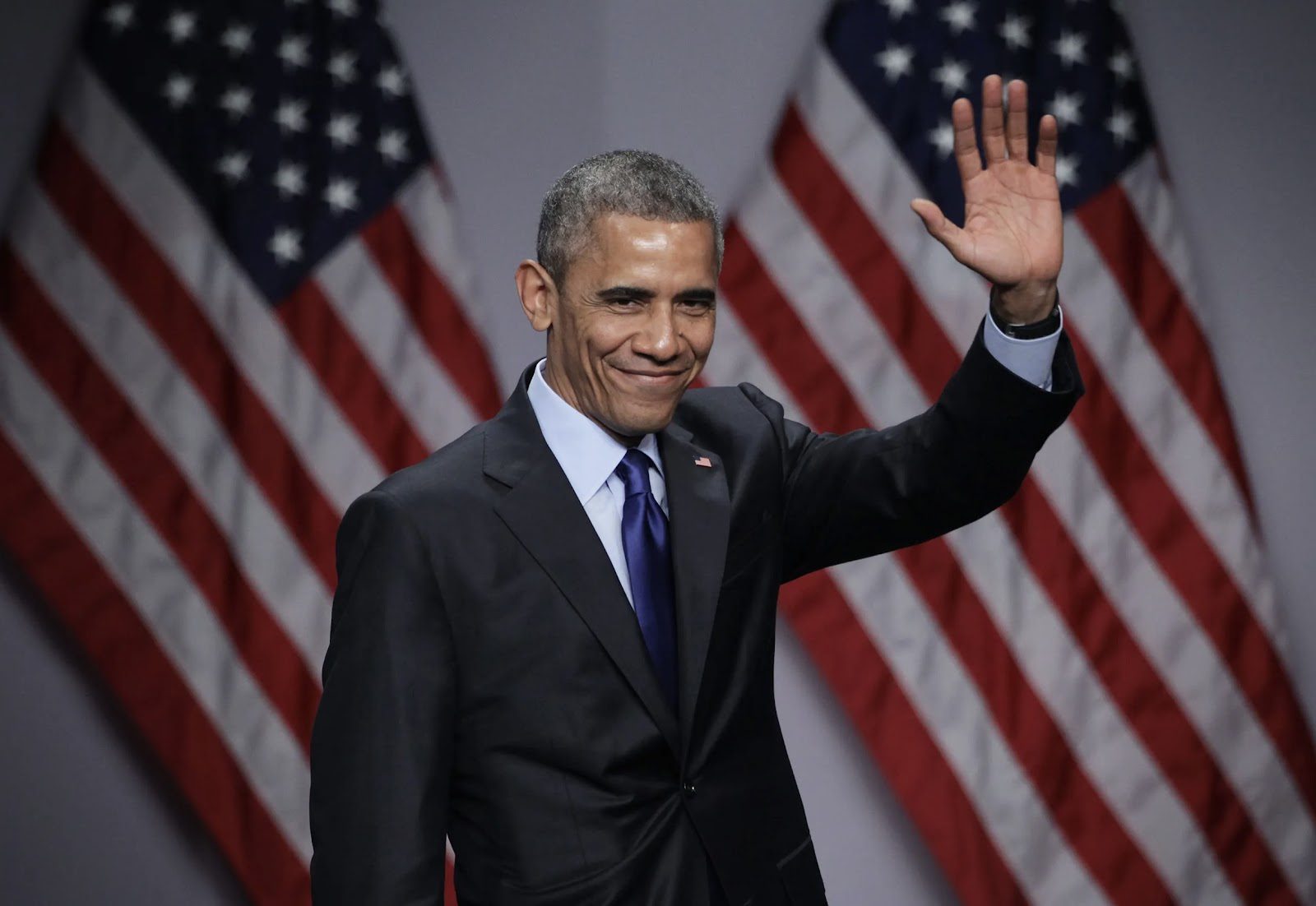
In 2020, Barack Obama released his memoir “A Promised Land,” which became a bestseller in the U.S. and abroad. The book covers the period of his life leading up to and including his first term as president. The publication received critical acclaim for its deep analysis and sincerity.
Barack Obama leaves a powerful political and cultural legacy. His story is an example of how any barrier can be overcome through education, hard work, and belief in one’s ideals. He inspires youth, supports the ideas of social justice, equality, and global cooperation. Obama also actively works after his presidency, engaging in public projects, promoting education, and leadership development.
Also, find out more about the life and career of legendary publisher Hugh Hefner.