

Every August, the skies over Chicago transform into an aerial stage, and the shores of Lake Michigan become a massive grandstand. The Chicago Air and Water Show is one of the oldest and largest free events of its kind in the United States, attracting millions of spectators who are captivated by speed, the roar of engines, and breathtaking stunts. Also, be sure to check out the Lollapalooza festival—one of the most famous music festivals in the world. Read more on chicagovski.
The History of the Show
In August 1959, the Chicago Park District organized a small event called the “Lakeshore Park Water Show.” Held on the beach in the Gold Coast neighborhood, it consisted mainly of water-based activities like rowing competitions, swimming, and lifeguard demonstrations. The primary goal was to engage young people in active summer recreation. The success of the first show inspired the organizers, and the following year, an aerial program was added, featuring simple stunts by civilian pilots. Throughout the 1960s, the show gradually evolved into a more ambitious event. Military pilots, parachutists, and aerobatic performers began to participate. The event was renamed the Chicago Air and Water Show and became an annual tradition combining both aviation and maritime elements.
By the 1970s, the show had become a popular attraction for residents of Chicago and its suburbs. Attendance grew, and the program became increasingly professional. In the 1980s, the show gained the support of the U.S. Armed Forces. Renowned squadrons like the U.S. Navy’s Blue Angels and the U.S. Air Force’s Thunderbirds began to perform. In the 21st century, the Chicago Air and Water Show solidified its status as the largest free airshow in the U.S. that isn’t held at an airbase but right in the city—along the Lake Michigan shoreline.
In 2020, the show was canceled for the first time due to the COVID-19 pandemic. It returned in a limited format in 2021, and by 2022, the festival was back in full force. It runs for two days, covers over 6 miles of coastline, and involves dozens of government agencies, sponsors, and thousands of volunteers in its organization.
Show Program
Every August, a spectacular event unfolds over Lake Michigan, eagerly awaited by Chicago residents and countless tourists. The Chicago Air and Water Show is not just a display of machinery; it’s a meticulously planned program that combines dynamics, history, entertainment, and emotion. While the lineup changes annually, it always retains its signature key elements.
The centerpiece of the program is the aerial performances, which take place throughout both days of the festival. Participants include:
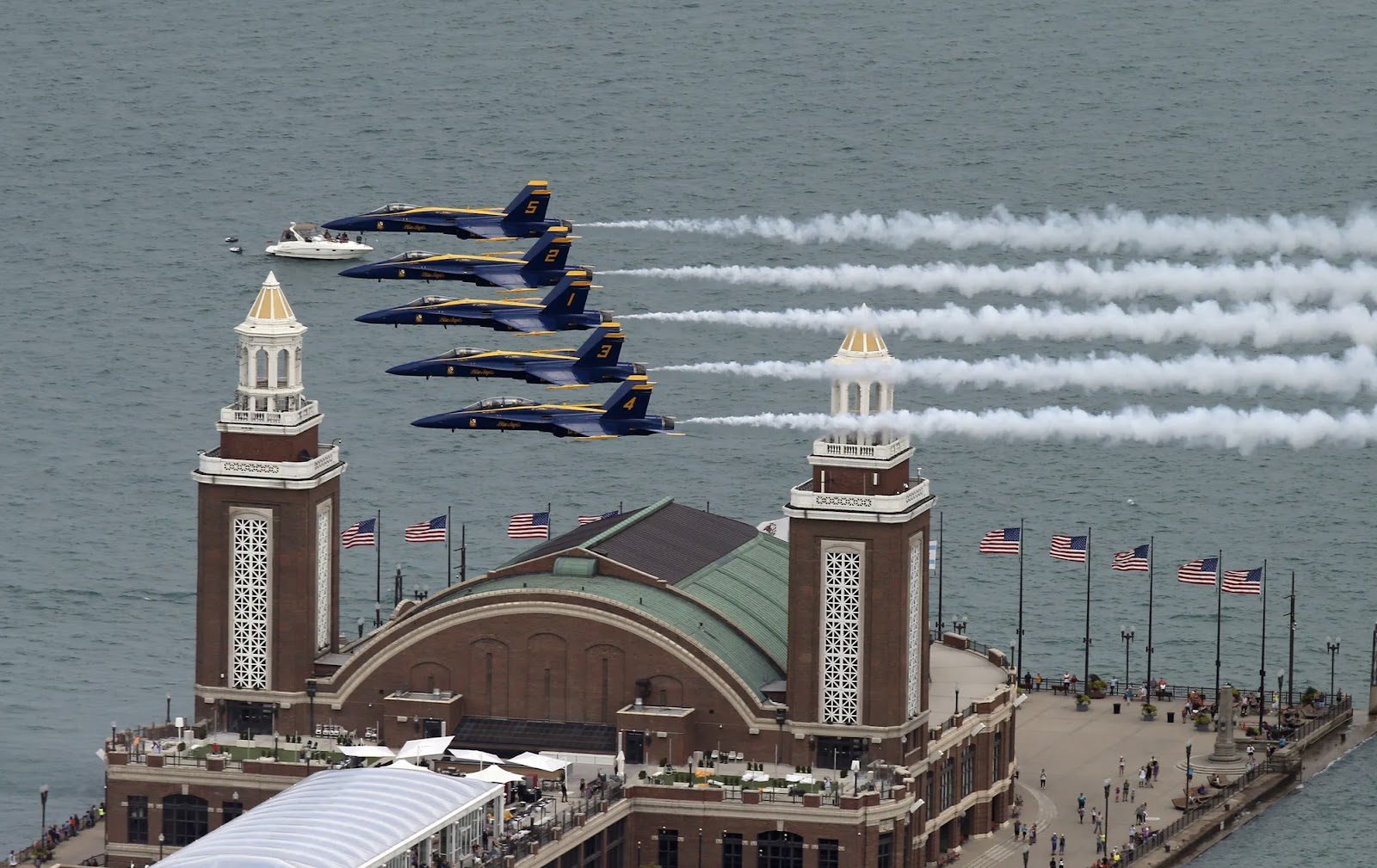
- Blue Angels (U.S. Navy) — One of the most popular aerial demonstration teams, performing synchronized high-precision aerobatics.
- Thunderbirds (U.S. Air Force) — Another elite team known for supersonic flights, daring maneuvers, and pinpoint coordination.
- Army Helicopters (Apache and Black Hawk) — Demonstrations of tactical maneuvers and rescue operations.
- Civilian Pilots — Solo performances featuring spins, barrel rolls, corkscrews, vertical takeoffs, and dives.
- Historic Aircraft — Demonstrations of planes from World War II, the Korean War, and the Vietnam War, celebrating the military heritage of the United States.
On the water, the program usually starts earlier, even before the airshow. It includes:
- Rescue Operations — Simulated emergencies with water rescues, such as a pilot ejection, civilian boat evacuation, and diver and medic drills.
- Parades of Motorboats and Coast Guard Vessels.
- Marine Skills Demonstrations — Including beach landings or simulated attacks from the water.
- Jet Skis, Wakeboarders, and Water Stunt Performers — Additional entertainment elements, especially in the family-friendly parts of the show.
Special program highlights:
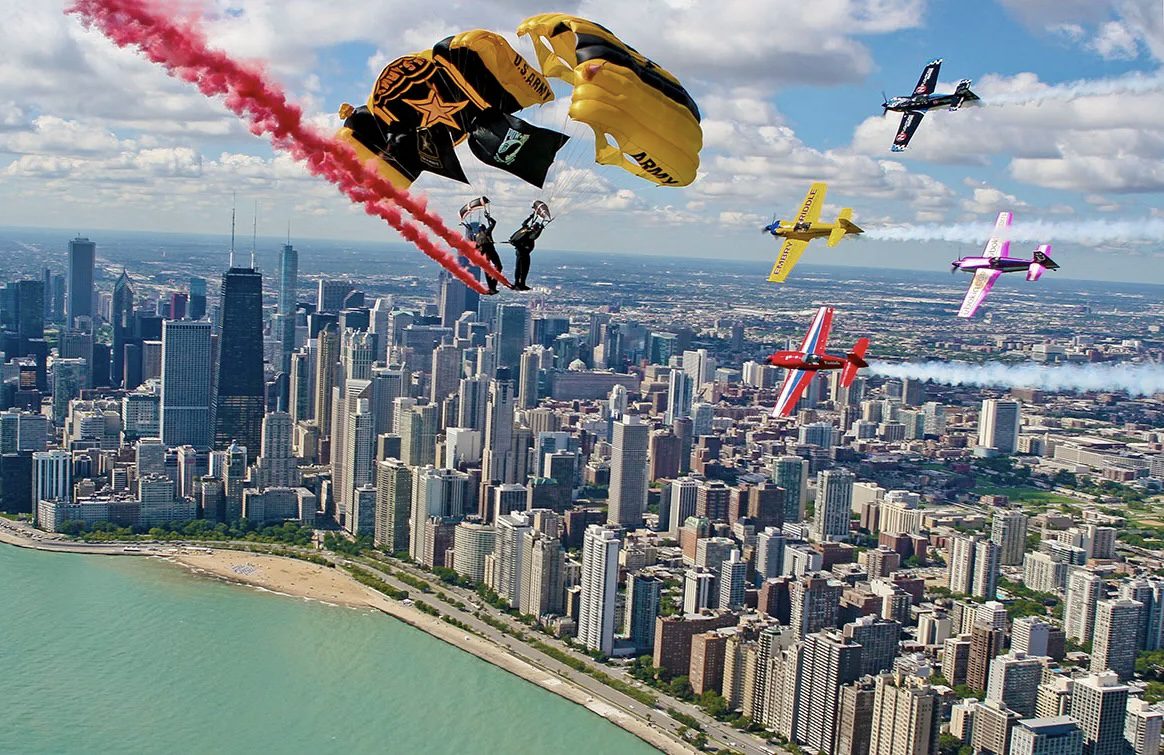
- Parade of Flags — Often opening the show, parachutists descend with the American flag while the national anthem plays.
- Tributes to Veterans and Military Personnel — Short speeches or ceremonies honoring heroes during the festival.
- Live Announcers — A team of commentators on the beach explains what’s happening in the sky and on the water, sharing interesting facts about the aircraft and vessels.
Safety and Professionalism
Despite the high-speed dynamics, lightning-fast maneuvers, and the roar of supersonic engines, the Chicago Air and Water Show remains a model of a meticulously organized event where safety for both participants and spectators is the top priority. Every element of the show undergoes multi-level checks and approvals. The military and civilian pilots in the program are among the most qualified in their fields. The elite Blue Angels and Thunderbirds squadrons, for example, are composed of the best pilots in the U.S.—each with thousands of flight hours, combat zone experience, and numerous certifications.
Before every show, all pilots:
- Undergo briefings, training, and simulations.
- Practice every stunt in the air and on the ground under the supervision of engineers and instructors.
- Receive real-time weather updates, as any deterioration in conditions can lead to changes in the program or cancellation of a performance.
Furthermore, specialists from the Federal Aviation Administration (FAA) and representatives of the Armed Forces monitor compliance with all standards. Flight paths, altitudes, speeds, and distances from the crowd are strictly regulated.
The situation on the water is similar: the Coast Guard, rescue teams, the fire department, and the Chicago Police are all on duty at various locations throughout the festival. Safety zones are established on the water and in the air where unauthorized individuals or private vehicles are prohibited.
Over its more than sixty-year history, the show has had almost no serious accidents or incidents. This is the best testament to the professionalism of the organizing team and the pilots. This reputation allows the show to attract new participants each year, receive support from government agencies, and guarantee a safe experience for hundreds of thousands of visitors.
Best Spots to Watch the Show
The show captures the sky, the water, and the hearts of millions of spectators. But to get the best experience, it’s important to choose the right viewing spot.
North Avenue Beach is the epicenter of the show, where the main action is concentrated. This is where the commentators announce the flights, and the aircraft fly closest to the shore. The beach transforms into a true festival zone with food trucks, sponsor areas, lifeguards, and thousands of spectators.
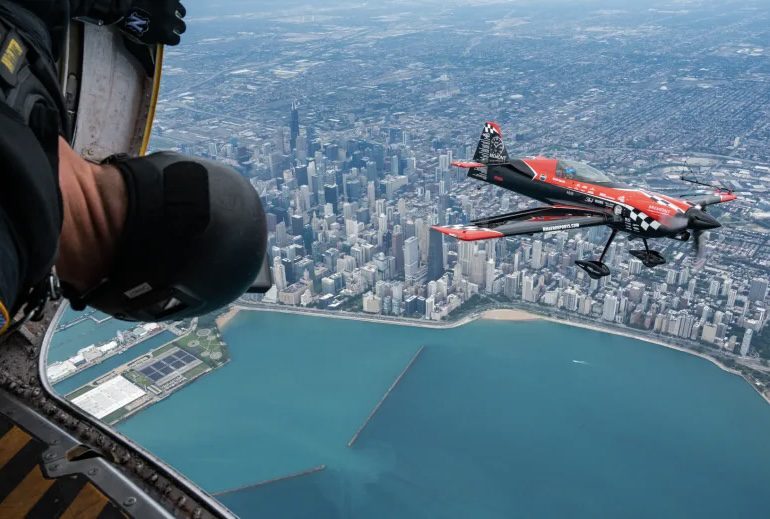
For those looking for an exclusive experience, lakefront rooftop bars and hotels are a great option. Hotels and restaurants along the lake often offer special packages with rooftop access, drinks, appetizers, and even telescopes.
If you want to avoid the largest crowds, Belmont Harbor and Fullerton Beach are ideal. They are located slightly north of the main area but still offer great views of the flights. This is an excellent choice for families with children or anyone who just wants to relax on a blanket in the park.
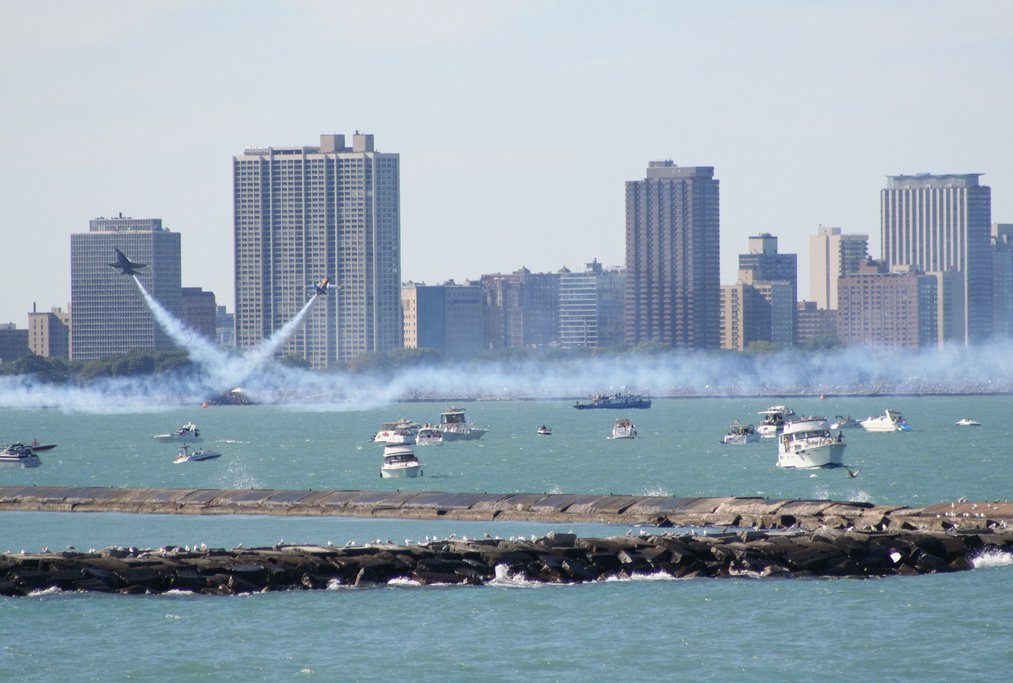
You can also rent a spot on a yacht or boat that goes out onto the open lake. This is one of the most spectacular ways to watch the show—unobstructed by crowds, with up-close views, right on the waves.
Read about James Belushi, the multifaceted actor from Chicago, known for his comedic roles.