

The Chicago Blues Festival is more than just a music event; it’s a celebration of the cultural heritage that shaped the sound of modern America. Every June, in the heart of Chicago, the city fills with deep rhythms, soulful vocals, and an authentic atmosphere of freedom. As the largest free blues festival in the world, it brings together legendary musicians and new talents from across the globe. Learn more about Northalsted Market Days, a Chicago festival of unity and fun—one of the largest street festivals in the U.S. Read more on chicagovski.
The History of the Festival
To understand the origins of the Chicago Blues Festival, one must dive into the musical history of the city itself. In the mid-20th century, Chicago became a major destination during the Great Migration of African Americans from the South to the North. Thousands of people fleeing racial discrimination and poverty brought with them not only their hopes but also their music—the blues. The traditional Delta blues, born on the plantations of Mississippi, was transformed in Chicago into a new sound: electrified urban blues. Acoustic guitars were replaced by electric ones, and solo performers gave way to powerful bands. This gave rise to the “Chicago blues”—a style that shaped legends like Muddy Waters, Howlin’ Wolf, Willie Dixon, Buddy Guy, and Koko Taylor.
The Chicago Blues Festival was officially established in 1984 as a tribute to Muddy Waters, who passed away in 1983. Considered “the father of Chicago blues,” his influence on world music is immeasurable. His legacy was the driving force behind creating an event that would not only celebrate the great musicians of the past but also support contemporary artists and preserve the spirit of the blues. The festival was initiated by the City of Chicago’s Department of Cultural Affairs.
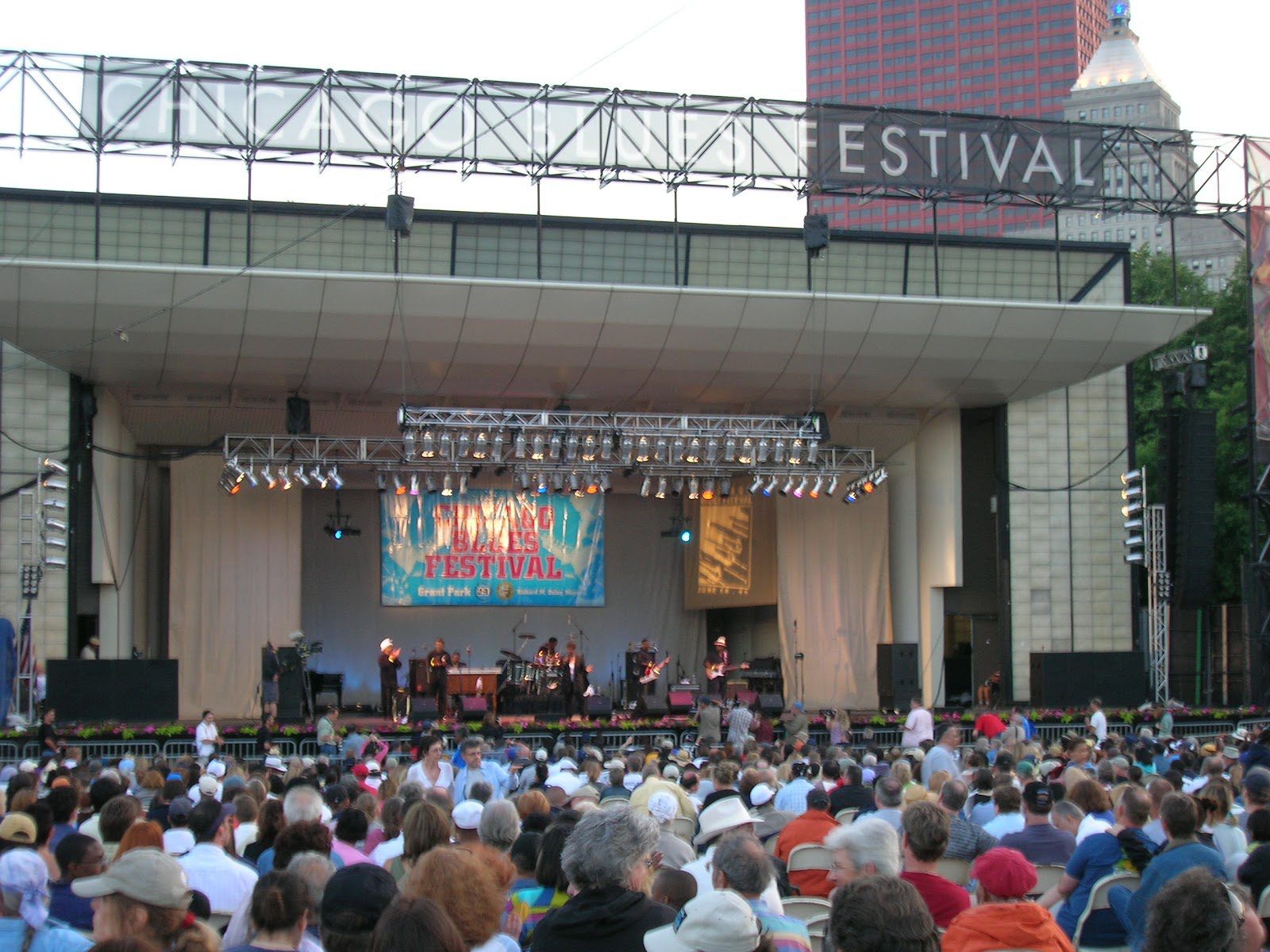
Where Does the Festival Take Place?
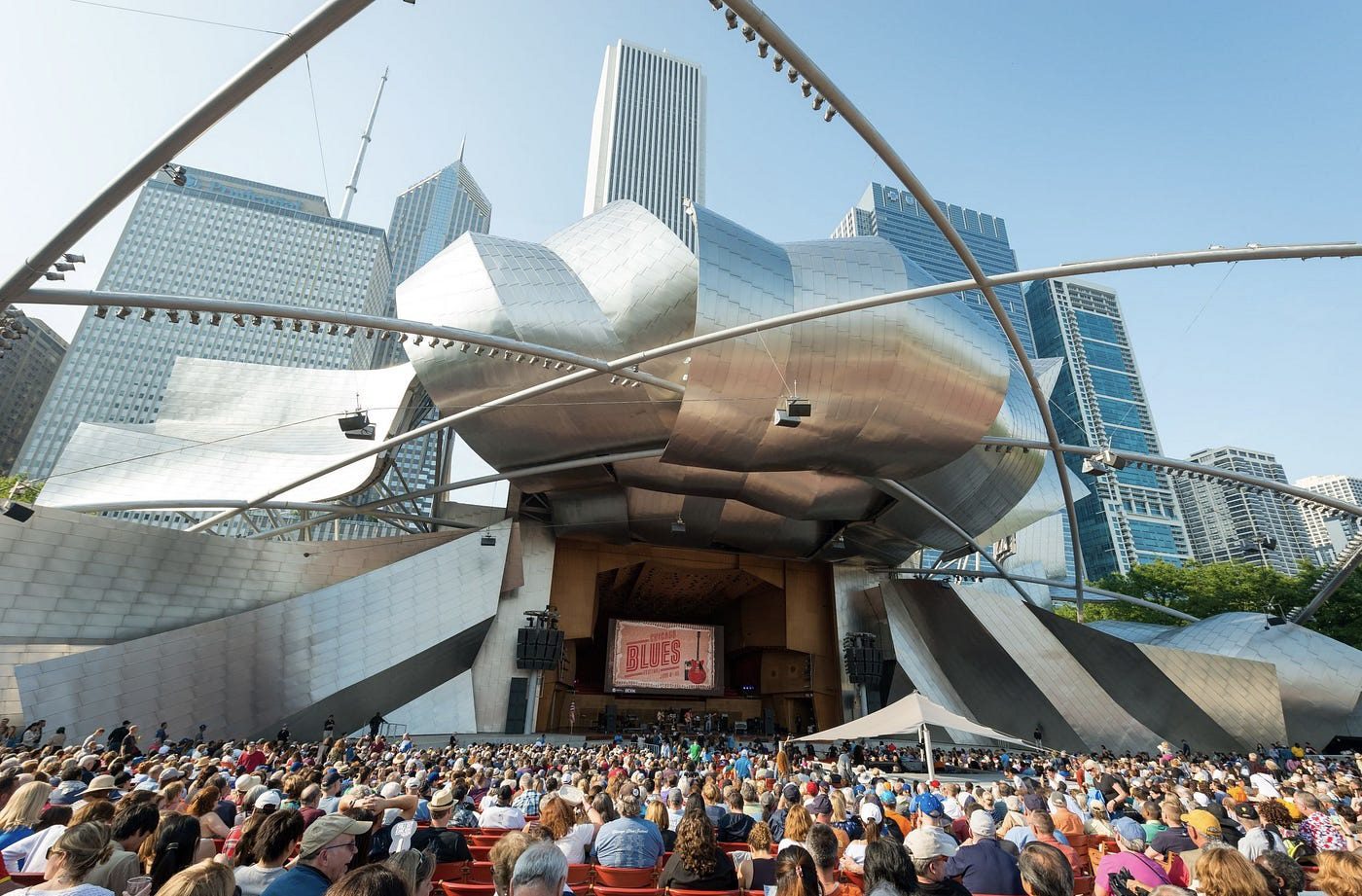
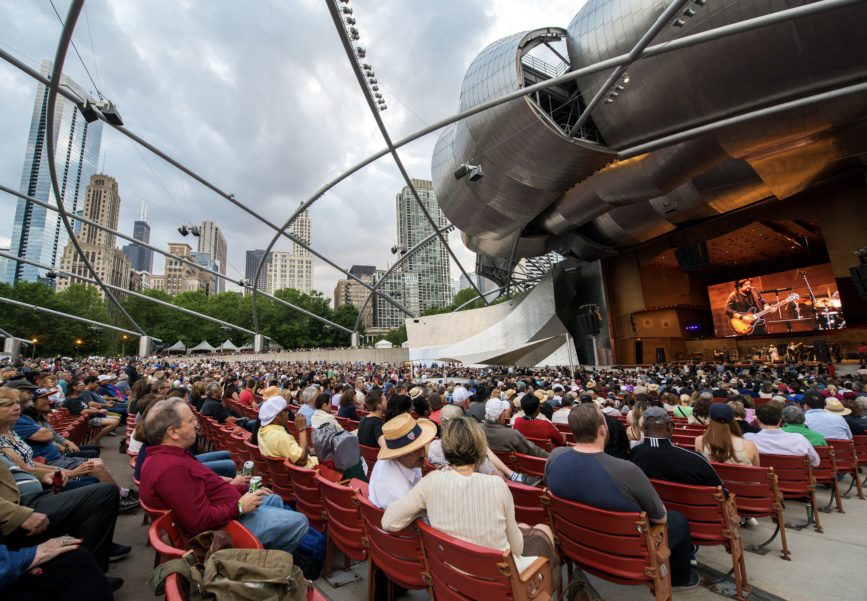
The Chicago Blues Festival traditionally takes place in the heart of the city—Millennium Park, which has become not only an architectural landmark of Chicago but also the city’s main cultural stage. This space blends urban dynamism with natural harmony—glass skyscrapers tower over wide lawns, fountains, and pedestrian walkways, turning the entire area into a living music map of the city. The main event happens at the Jay Pritzker Pavilion, a futuristic outdoor stage designed by legendary architect Frank Gehry. Its complex metal structure seems to unfold in space like a sound wave, while its well-designed acoustics and spacious “Great Lawn” allow for comfortable concert enjoyment even from several hundred feet away. Smaller stages are scattered throughout the park, serving as platforms for young performers, local bluesmen, or themed programs like women in blues, blues gospel, and blues and jazz. Thanks to this, even a short stroll through the park becomes a musical discovery.
The food court area deserves special mention: here, you can taste classic Chicago food, street food from various world cuisines, as well as refreshing drinks and local craft beer. Nearby are relaxation zones with shaded canopies, beanbags, loungers, and even children’s play areas. For visitors who want to take a piece of the festival home, a merch area sells T-shirts, vinyl records, posters, accessories, and souvenirs with blues-themed designs. You can often spot the musicians themselves here, happy to chat with fans or sign a record. In the evenings, the park is filled with soft light, the air is thick with rhythm, and every accordion, guitar, or voice from the stage feels like part of living history.
The Music at the Festival
The Chicago Blues Festival offers three days of music that doesn’t just reach your ears—it touches your soul. The entire spectrum of blues is on display here: from the slow, raw Delta blues born in the American South to the more rhythmic and explosive Chicago electric blues, as well as its modern offshoots like soul-blues, funk, gospel, blues-rock, and blues-jazz. The festival is a kind of musical journey through time. Visitors can feel the spirit of past eras when the blues was the voice of the oppressed, and also see how it is transformed in the hands of modern artists without losing its roots. However, the festival doesn’t live only in the past. Every year, new stars perform here, preserving the spirit of tradition while experimenting with form, adding modern arrangements, electronic elements, funk beats, and jazz improvisations.
Each day of the festival has its own musical narrative: from the mellow daytime sounds to the evening climaxes when the sky over Millennium Park fills with sounds that feel like a confession. The Chicago Blues Festival is three days when Chicago speaks a single language—the language of the blues, capable of uniting people of different races, generations, and experiences through music that holds space for pain, hope, love, and freedom.
The Chicago Blues Festival doesn’t just remember the past—it recreates, revives, and passes it on. The festival program includes:
- Musical Tributes — dedicated to specific artists or periods of blues.
- Educational Events — lectures, workshops on blues history, and public interviews with musicians.
- Photo Exhibitions — archival photos of club life, portraits of musicians, and daily life in African American communities.
- Generational Meetups — where young performers learn from stage veterans, preserving the continuity of the style.
- City Tours — to iconic sites in Chicago’s blues history.
The modern generation of bluesmen doesn’t just imitate the classics—they reimagine their legacy, weaving in new themes, contemporary rhythms, and elements of spoken word, hip-hop, indie, and even electronica. But the foundation remains unchanged: the blues is the voice of the soul, an instrument of struggle, and a way to speak the truth through music.
Historic Performances
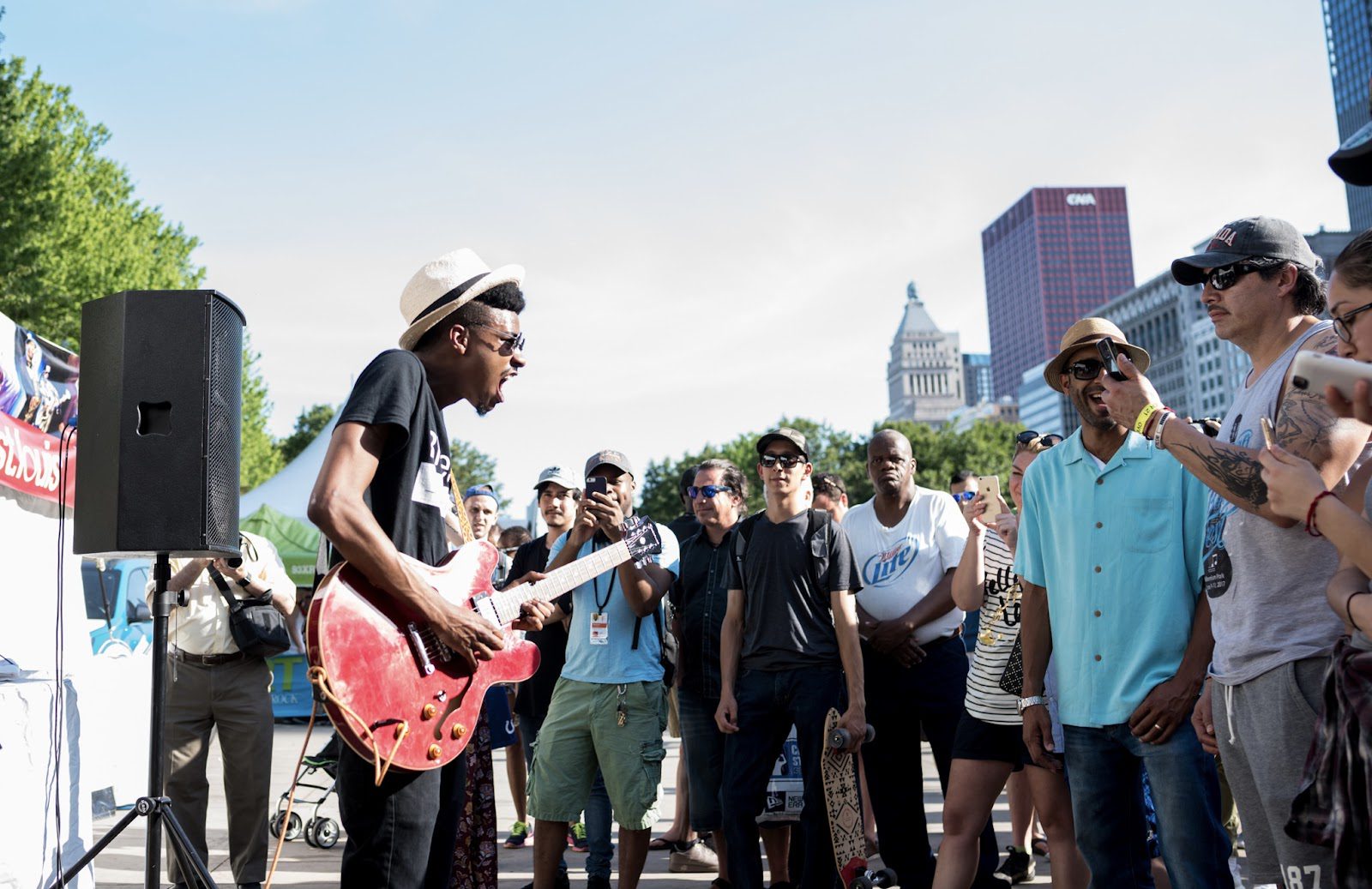
Throughout its long history, the Chicago Blues Festival has been the stage for performances that are not just memorable—they become part of the city’s musical legend. Here are a few standout moments that fans still talk about. In honor of his 82nd birthday, legendary Chicago guitarist Buddy Guy took the stage at the Jay Pritzker Pavilion and played a set that drew tens of thousands of listeners. His improvisation, playful manner, and occasional guitar playing with his teeth turned the performance into a true showstopper. He ended the concert with the song “Damn Right, I’ve Got the Blues,” which the entire park sang along to. In 2022, Christone “Kingfish” Ingram stunned the audience with his maturity, technique, and emotional depth. His blues solos earned standing ovations, and critics hailed his performance as “the birth of a new blues icon.” When the legendary Mavis Staples took the stage, the park was filled not just with music, but with a sense of shared history. Her rendition of “I’ll Take You There” turned into a massive choir performance with the entire audience. In 2021, a separate stage was dedicated exclusively to women in blues. Performances by Ivy Ford, Joanna Connor, and Melody Angel showcased the power, charisma, and modern face of the blues. This showcase is considered one of the festival’s best-curated projects in recent years.
Why Should You Go?
It’s the world’s largest blues festival, and it’s absolutely free. You’ll see world-renowned stars, Grammy winners, and local legends who play the blues straight from the heart. You’ll experience an atmosphere of musical freedom, rich culture, and sincere emotion. It’s the perfect way to connect with America’s musical heritage in its purest and most vibrant form.
However, visitors should keep a few tips in mind. It’s best to arrive early—the best spots near the stage fill up quickly, especially for the evening performances. Be sure to bring a blanket or a folding chair, as Millennium Park has plenty of lawn space for sitting. Sunscreen and a hat are a must, as June in Chicago can be very sunny. Finally, pack a water bottle and some snacks—although there are food courts, it’s always a good idea to have something with you.
Read about Patricia Arquette—a successful actress and activist who combines her acting career with social advocacy.