

She stands as one of the most influential figures in the fight for social justice in American history. Jane Addams became a symbol of the U.S. Progressive Era, a reformer who dedicated her life to aiding the poor, advocating for the rights of women and children, and establishing world peace. Learn about the path to success of Chicago businessman Carter Reum. More at chicagovski.
Biography
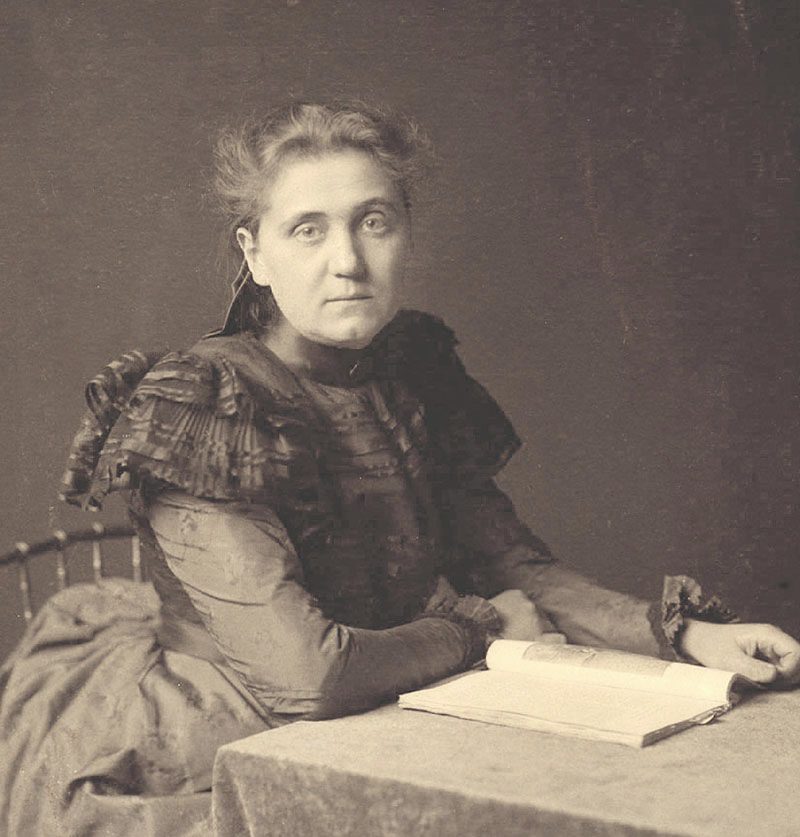
Jane Addams was born on September 6, 1860, in Cedarville, Illinois, into a wealthy and respected family. Her father, John Huy Addams, was an influential local businessman, an Illinois State Senator, and a personal friend of President Abraham Lincoln. It was her father who instilled in Jane a deep sense of civic duty, a love for justice, and a respect for education. She lost her mother at a young age, a traumatic experience that led her to reflect on the suffering of others from childhood. From her youth, Jane felt especially sensitive to human suffering. She observed the coexistence of wealth and destitution in society and realized she wanted to dedicate herself to helping the less fortunate. In 1881, Jane graduated from Rockford Female Seminary, one of the leading women’s colleges of the time, where she received a classical liberal arts education with an emphasis on literature, philosophy, and ethics. Initially, she planned to enter medical school to become a doctor for the poor, but deteriorating health forced her to change her plans.
In search of meaning and new ideas, she embarked on an educational tour of Europe that lasted several years. During this trip, she gained a deeper understanding of the social problems facing large cities. After returning to the U.S., Jane began looking for a way to implement the idea of “living among the community” in her own environment.
Establishing Hull House
In 1889, Jane Addams, along with her friend and kindred spirit Ellen Gates Starr, founded Hull House—one of the first social settlement houses of its kind in the United States. They leased an old, dilapidated mansion in a poor, industrial neighborhood on Chicago’s Near West Side. This move was unprecedented: two educated, middle-class women chose to live among immigrants and laborers, not just to offer external aid, but to truly become part of the community.
The mission of Hull House was radically new for its time: not merely to hand out food or clothing, but to provide educational, cultural, legal, and emotional support to the most vulnerable populations. In its early years, Hull House became a refuge for immigrants arriving in Chicago in search of a better life, who often found themselves trapped by poverty, discrimination, and exploitation.
Hull House operated numerous programs, including:
- Night schools for adults;
- Kindergartens and day nurseries for working mothers;
- Legal aid to protect immigrants’ rights;
- Workshops for crafts, music, and theater;
- A public library, reading rooms, and women’s clubs;
- Sanitary initiatives, including studies of slum living conditions and campaigns for clean water and housing reform.
Over the years, Hull House became a national model for social work. By the 1920s, the center had grown to encompass more than a dozen buildings and over 100 different programs. Jane Addams not only managed the institution but also actively wrote books and articles, lectured, and collaborated with other reformers, including Ida B. Wells, Florence Kelley, and W.E.B. Du Bois. Her work helped to create a new profession—the social worker—and she became one of its chief ideologues.
The Fight for Peace
Following the success of Hull House and achieving widespread recognition in the U.S., Jane Addams shifted her focus to global issues—primarily those of peace and ending wars. For her, the fight for social justice could not exist separately from the fight for peace: she was convinced that war was a source of poverty, discrimination, and the destruction of human potential.
When World War I broke out in 1914, Jane Addams adopted a principled pacifist stance, which was unpopular in the U.S. at the time. She firmly opposed American intervention in the conflict, believing that the path of force would only deepen global suffering.
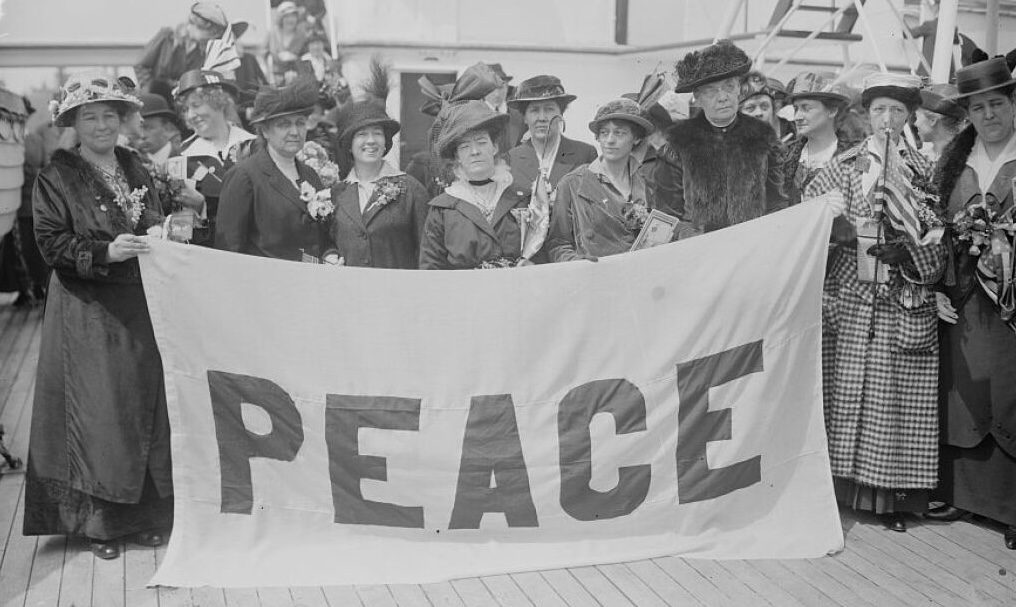
In 1915, Addams participated in the International Congress of Women at The Hague and became the president of the newly formed Women’s International League for Peace and Freedom (WILPF). Alongside hundreds of women from various countries, she advocated for a diplomatic resolution to the conflict, the creation of conditions for international understanding, gender equality in global politics, and disarmament. This stance cost her reputation in certain American circles. She was accused of betrayal and branded as “unpatriotic,” but Addams never backed down from her convictions.
After the war, Jane Addams continued to champion peace, participated in international conferences, and advocated for arms reduction, women’s rights, and the protection of minorities. She traveled the world, met with thought leaders and heads of state, and shared the Hull House experience as an example of non-violent social progress. In 1931, at the age of 71, Jane Addams became the first American woman to receive the Nobel Peace Prize. This recognized her lifelong, principled work for peace, humanism, and equality. She shared the award with Nicholas Murray Butler, an American philosopher and educator.
Pioneer of Social Work
Jane Addams is widely considered one of the founders of social work as a profession. Her approach was revolutionary: instead of a condescending charity model, she championed interaction, partnership, and respect for the dignity of every individual. She established Hull House not as a shelter, but as a place of opportunity—for education, cultural growth, legal aid, and community development. Her methodology forms the basis of modern social policy, community initiatives, and municipal programs worldwide. In university social science departments, Addams’s research is required reading.
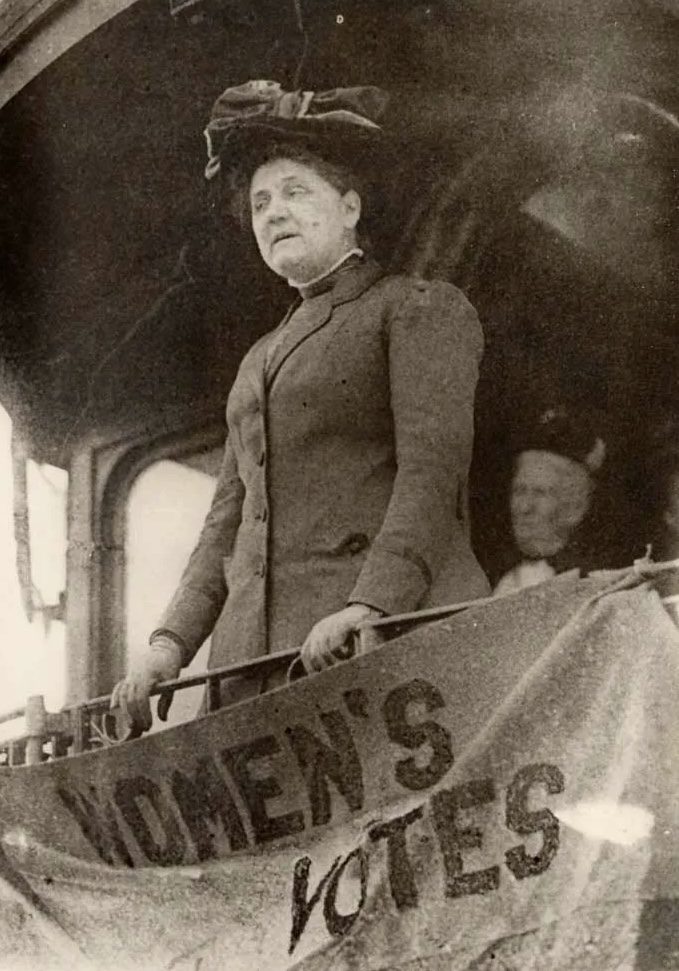
She actively fought for women’s suffrage, equal access to education and economic opportunities, and women’s participation in international peacemaking processes. In her work, Jane Addams combined moral leadership with practical action. She didn’t just voice ideals—she implemented them through concrete programs and reforms. Her writings, particularly the books “Democracy and Social Ethics,” “Twenty Years at Hull House,” and “Peace and Bread in Time of War,” became classics of American ethical and social thought. In the 1930s, Addams was considered one of the most influential women in the world, even without holding a formal political office.
Her Enduring Influence
In the 21st century, the name of Jane Addams is carried by dozens of schools, colleges, and social centers in the U.S., along with global peace and human rights awards, historical museums, and memorial buildings, including the restored Hull House in Chicago. She is honored both as an American national heroine and as a symbol of global peace activism. In 2007, Jane Addams was inducted into the National Women’s Hall of Fame.
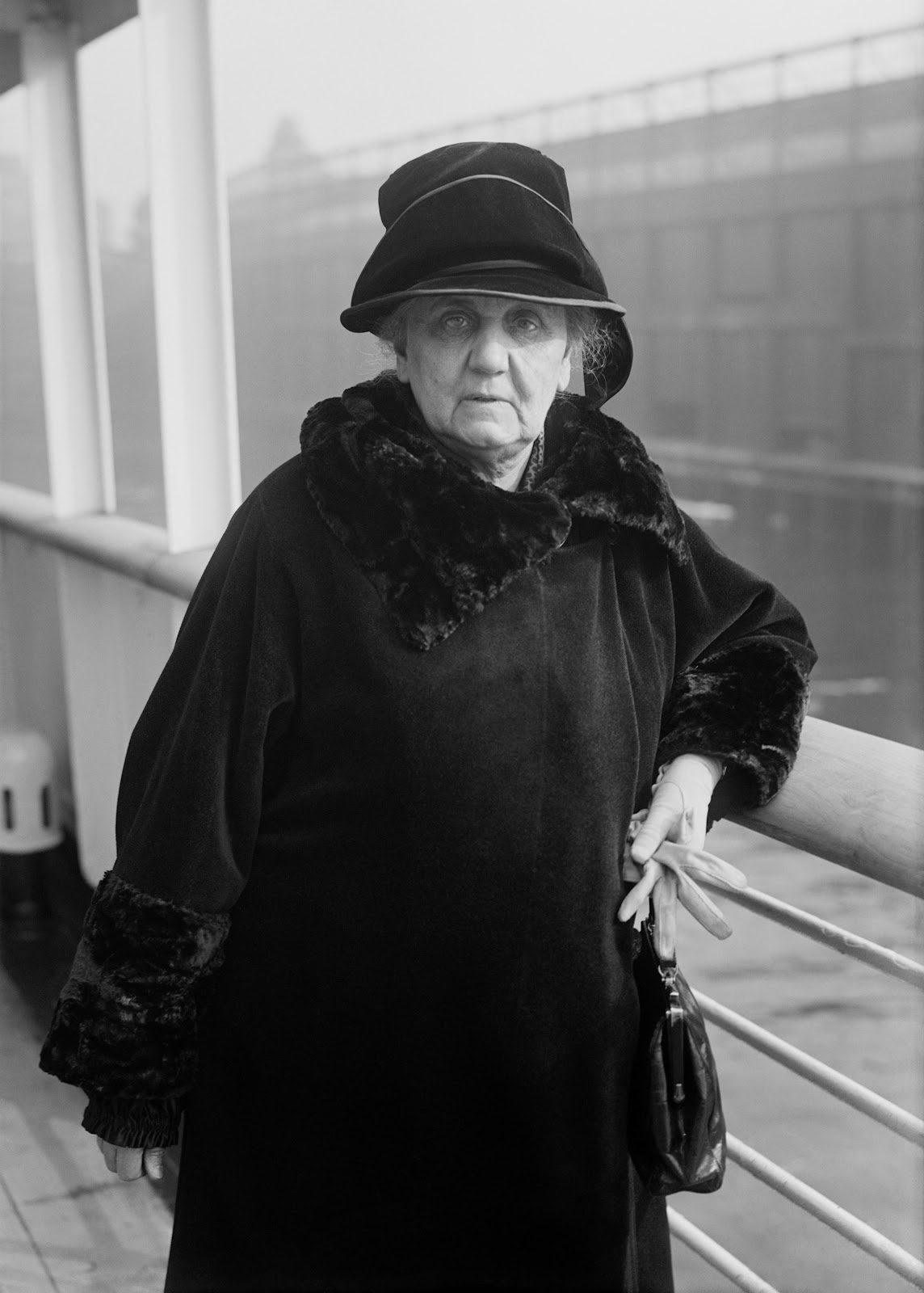
Jane Addams passed away in 1935, but her ideas and work live on. She is regarded as the “Mother of Social Work” in the U.S., and Hull House as the first example of a modern community center. Her approach to social policy as a moral obligation to society has influenced the development of social programs, legal reforms, and the feminist movement.
Jane Addams was not just a reformer; she was the moral compass of her era. She devoted her life to those whom society ignored—immigrants, the poor, women, and children. Her work created a bridge between humanism and politics, between ideals and practical action. Read about the development of business in 19th-century Chicago and its impact on the city’s economy.