

The name of American gangster Al Capone is recognized worldwide. His criminal empire raked in an estimated $100 million annually—a staggering sum for the era. As reported by chikagovski.com, the notorious gangster led a dramatic life defined by conflict, violence, and immense wealth.
Childhood and Street Gangs
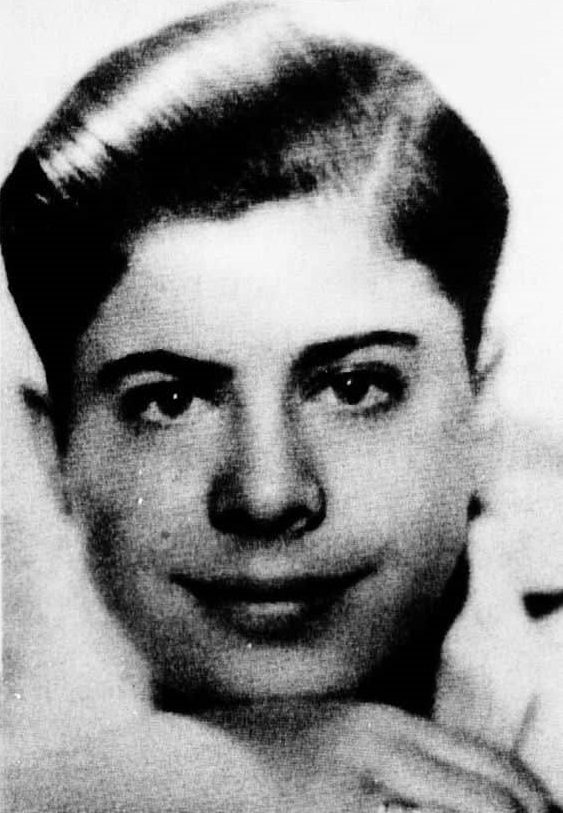
Alphonse Gabriel “Al” Capone was born on January 17, 1899, in Brooklyn, New York. His parents were Italian immigrants who had moved from Naples to the States in search of a better life. His father was a barber, and his mother was a seamstress. In addition to Alphonse, the couple raised eight other children. Capone spent his childhood in Brooklyn.
Capone’s first serious incident occurred when he was in the sixth grade. He assaulted a teacher and was promptly expelled from school. After leaving his education behind, Capone made a living with jobs at a bowling alley and a local confectionery, and even tried his hand at semi-professional basketball.
At the same time, the young Capone joined two street gangs, the “Brooklyn Rippers” and the “Forty Thieves Juniors,” which were known for vandalism across New York City. During this period, Capone fell under the powerful influence of local gangster Johnny Torrio.
“Scarface”
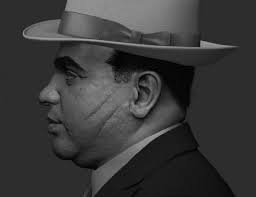
At sixteen, Capone joined the powerful “Five Points Gang,” led by racketeer Frankie Yale. His new mentor hired him as a bouncer at his establishment, the Harvard Inn. It was in this bar that an incident gave Al Capone his lifelong nickname. He insulted a female patron, and her brother retaliated by slashing him across the face with a knife. The injury left Capone with a prominent scar and the moniker “Scarface,” a name he would despise for the rest of his life.
Soon after, Capone became involved in numerous altercations that often turned deadly for his opponents. In one instance, he allegedly robbed and shot the winner of a craps game. However, the police could not press charges against the criminal because no witnesses would testify that the young man died at the gangster’s hands.
At the age of 19, Al Capone married Mae Coughlin. Just one month after their wedding, the couple had a son, Albert “Sonny” Capone. It’s worth noting that Capone and Mae Coughlin remained married for his entire life.
On one occasion, Al Capone assaulted a member of the rival “White Hand” gang. The man later died from his injuries. The death of their associate enraged the leaders of the White Hand, who began to hunt Capone and his family. Fearing for their lives, Al Capone moved his family to Chicago.
A New Life in Chicago
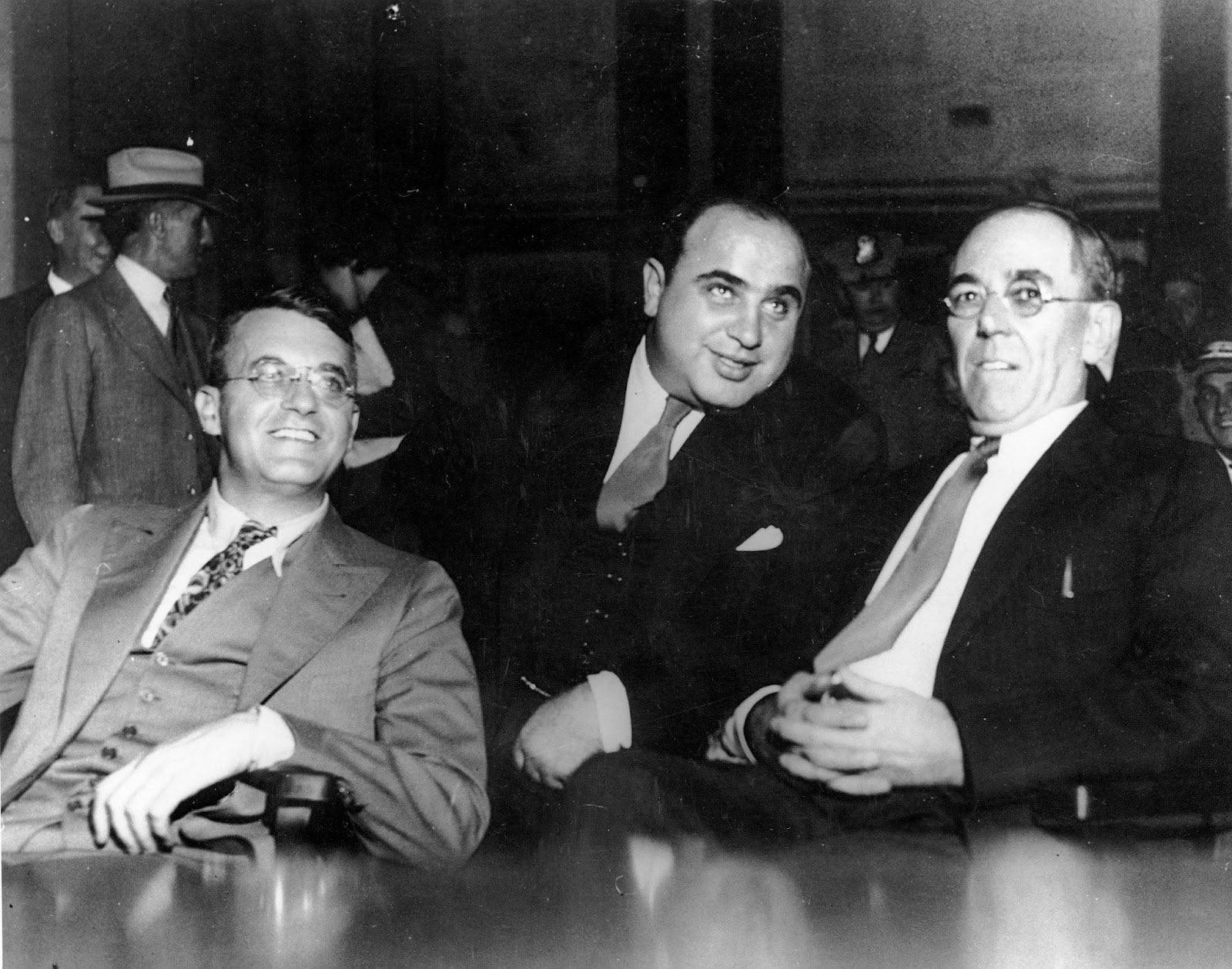
Back in his teenage years, Al Capone had met Johnny Torrio, a gangster and leader of New York’s “James Street Boys” gang. The mentor taught his young protégé the fundamentals of the “art of the racket.” Eventually, Torrio moved to Chicago, where he took over the management of a large brothel.
A few years later, Torrio summoned his protégé, Al Capone, from New York. In what seemed like a strange coincidence, Torrio’s boss, James “Big Jim” Colosimo, was murdered almost immediately after Capone’s arrival. This event kicked off a new era of gangster rule in Chicago.
The fortunes of Al Capone and his boss began to skyrocket with the enactment of Prohibition. Bootlegging and the illegal sale of alcohol brought Torrio’s gang millions in profits. However, in 1925, Johnny Torrio “retired,” and Al Capone took the reins of Chicago’s criminal underworld.
The new mafia boss managed bootlegging operations, organized gambling, and brutally eliminated his competitors. With his new status, Al Capone set up his office in the Metropole Hotel, believing it would enhance his level of respect within the criminal world.
Unlike traditional figures of the criminal underworld who tried to avoid publicity at all costs, Al Capone reveled in a life of luxury, enjoyed speaking with the press, and frequently attended high-profile social events.
Whiskey Smuggling and Brutal Murders
One of the gangster’s biggest missions was organizing a whiskey smuggling route from Chicago to New York. However, this task was accompanied by a large number of killings, involving both competitors and innocent people. The high-profile murders stirred public outrage. Yet, the police were powerless, as they lacked sufficient evidence to connect Al Capone’s gang to the shootings.
For a time during his “reign,” the mafia leader tried to present himself as a peacemaker, calling on Chicago’s gangs to stop the killing and violence. However, the moratorium lasted only two months before everything resumed with renewed force.
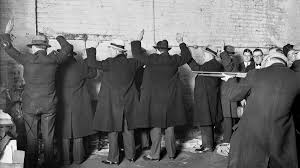
The most infamous mass murder under Al Capone’s command is known as the “St. Valentine’s Day Massacre.” On February 14, 1929, members of George Moran’s gang were brutally murdered. Seven men were lured into a garage in Lincoln Park, lined up against a wall, and shot at point-blank range by four assailants disguised as police officers.
The crime shocked society. Law enforcement launched an investigation, proposing various theories and scenarios. However, the suspects were never found. It was widely believed among Chicago residents that Al Capone ordered the killing. But the crime lord was never formally charged for his involvement in the “St. Valentine’s Day Massacre.”
Trial and Imprisonment in Alcatraz
In 1929, Al Capone was arrested as he was leaving a movie theater. The reason for his imprisonment was the illegal carrying of a weapon. However, the gangster’s time behind bars was short; he was released in March 1930.
Nevertheless, the arrest had negative consequences. Al Capone’s name was added to the list of the “Most Wanted Persons in the USA.” This was a blow to the leader of Chicago’s underworld, as he had always sought the fame of a respected and esteemed member of society.
In 1931, law enforcement managed to gather enough evidence to charge Al Capone with evading $200,000 in taxes. In total, about 5,000 criminal cases were opened against the gang leader and his associates.
To reduce his sentence, Al Capone resorted to various methods: he tried to make a secret deal with prosecutors and to bribe the jurors. However, the court ultimately found him guilty and sentenced him to 11 years in prison and a $50,000 fine.
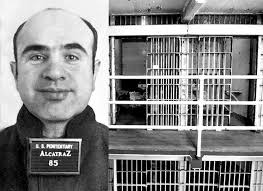
The crime boss awaited the verdict in an Atlanta prison, where he had access to considerable privileges. However, after the sentence was handed down, Al Capone was transferred to the infamous Alcatraz prison. There, the gangster almost completely lost contact with the outside world, only occasionally receiving letters or newspapers. Thanks to his good behavior and the absence of incidents involving him in prison, Al Capone managed to reduce his sentence to six years behind bars.
During his time in Alcatraz in 1938, the mobster was diagnosed with neurosyphilis. A year later, he was released due to his health. Al Capone spent the last years of his life with his family at his estate in Palm Beach. On January 25, 1947, the heart of the world-famous gangster stopped; he was 48 years old. Al Capone was buried in Chicago.
An interesting fact remains: to this day, it is still unknown where the world’s most famous gangster hid his multi-million dollar fortune.