

Vivian Maier was an American street photographer whose work remained virtually unknown to the public during her lifetime. For decades, she worked as a nanny and caregiver in Chicago, spending her free time documenting city streets, passersby, children, laborers, people from all walks of life, and herself. More at chicagovski.
Her photographs gained worldwide recognition only after her death. In 2007, part of Maier’s belongings was auctioned off due to unpaid storage locker rent. Among the dusty boxes and suitcases lay thousands of negatives, prints, undeveloped rolls of film, audio recordings, and other personal items. Today, she is considered one of the defining figures of 20th-century American street photography. Maier’s work is preserved in research collections, exhibited in major galleries, and published in monographs, while her extraordinary life became the subject of the acclaimed documentary Finding Vivian Maier.
Who Was Vivian Maier?
Vivian Dorothy Maier was born on February 1, 1926, in New York City. Her mother was French, and her father was of Austro-Hungarian descent. She spent a significant portion of her childhood moving between the United States and France. Records show that Maier lived with her mother in France before returning to New York, eventually relocating to Chicago in 1956.
She earned her living caring for children in affluent households. Yet once her shifts ended, Vivian transformed into an observant chronicler of the city. She walked miles through Chicago on foot, camera perpetually in hand, capturing anything that caught her eye. The children in her care often accompanied her on these excursions. Maier would lead them from wealthy suburbs straight into bustling downtown neighborhoods, introducing them to an entirely different, unvarnished side of Chicago.
She Never Showed Her Photos to Anyone
One of the greatest mysteries surrounding Vivian Maier is why she kept her work hidden. She never pursued solo exhibitions, never sought a public career, and never attempted to monetize her passion or chase acclaim. Instead, her negatives sat tucked away in cardboard boxes and storage lockers for years, leaving hundreds of rolls of film undeveloped. As a result, Maier never experienced even a fraction of the international renown her name commands today.
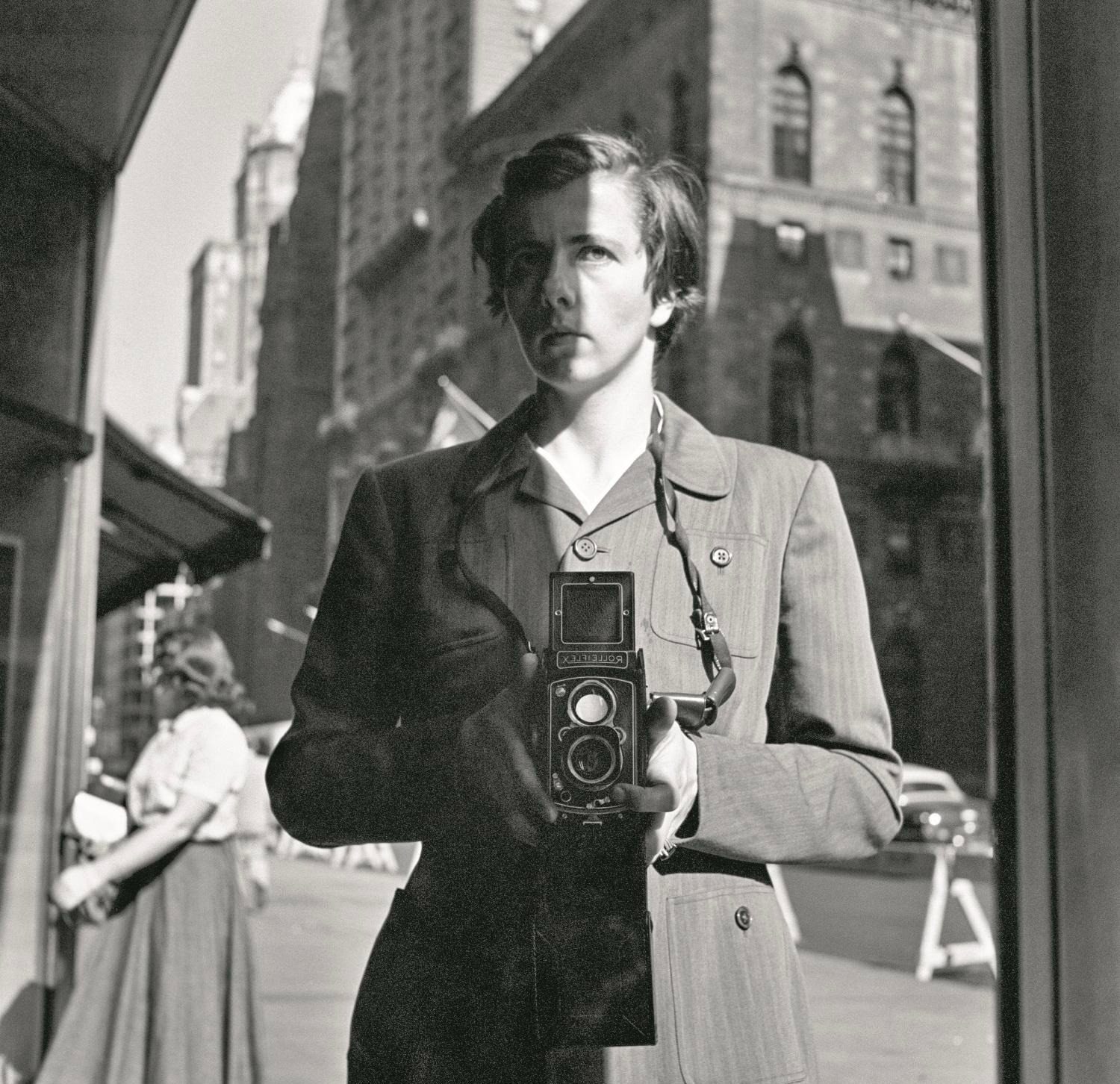
Her trademark tool was a Rolleiflex camera. Maier favored medium-format cameras capable of producing remarkably sharp, detailed images. Designed with a waist-level viewfinder, the camera allowed her to look down into the lens from above rather than raising it to her face. This setup proved ideal for street photography: Maier could remain an inconspicuous observer without drawing unwanted attention from people around her.
What Did Vivian Maier Photograph?
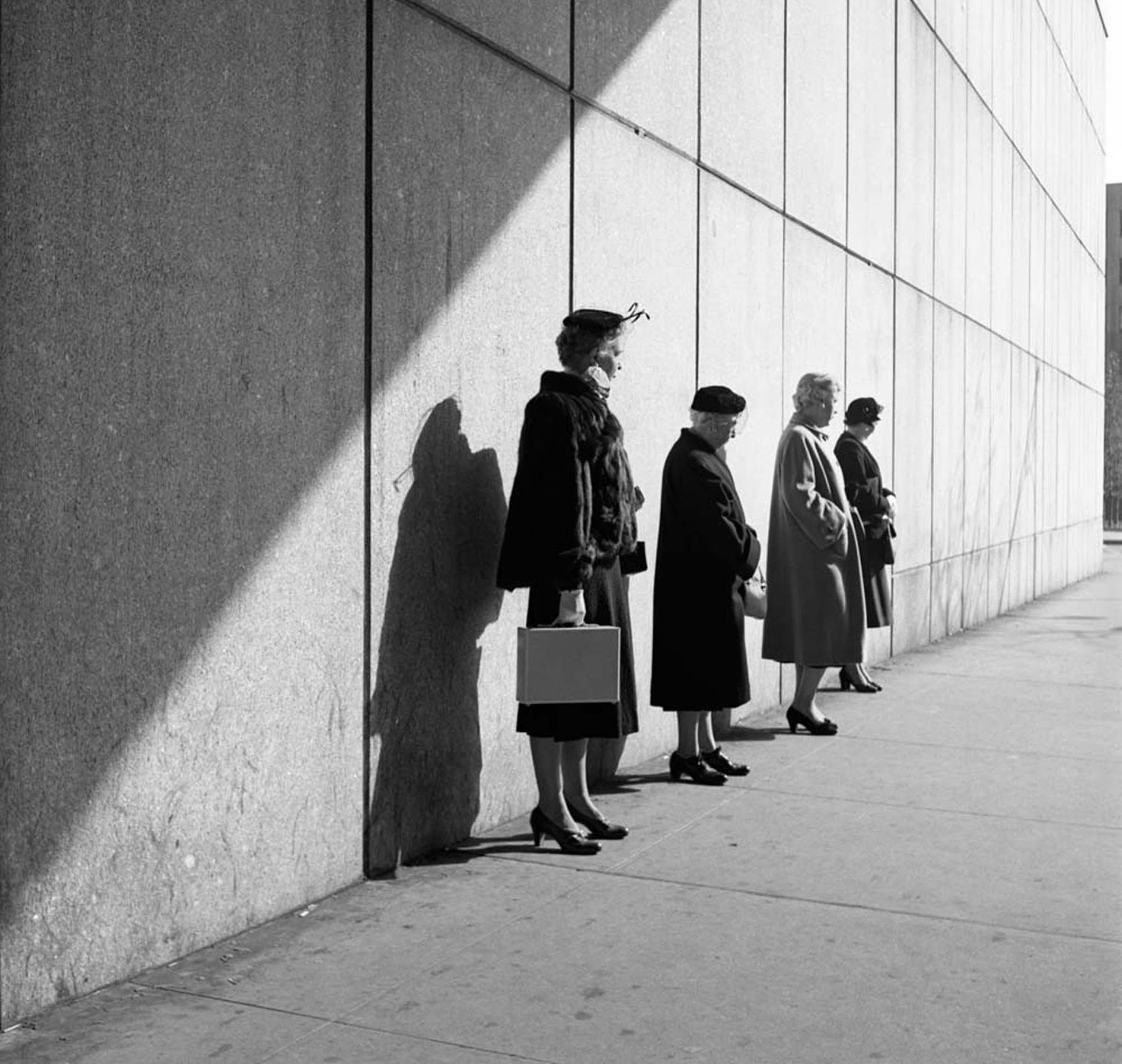
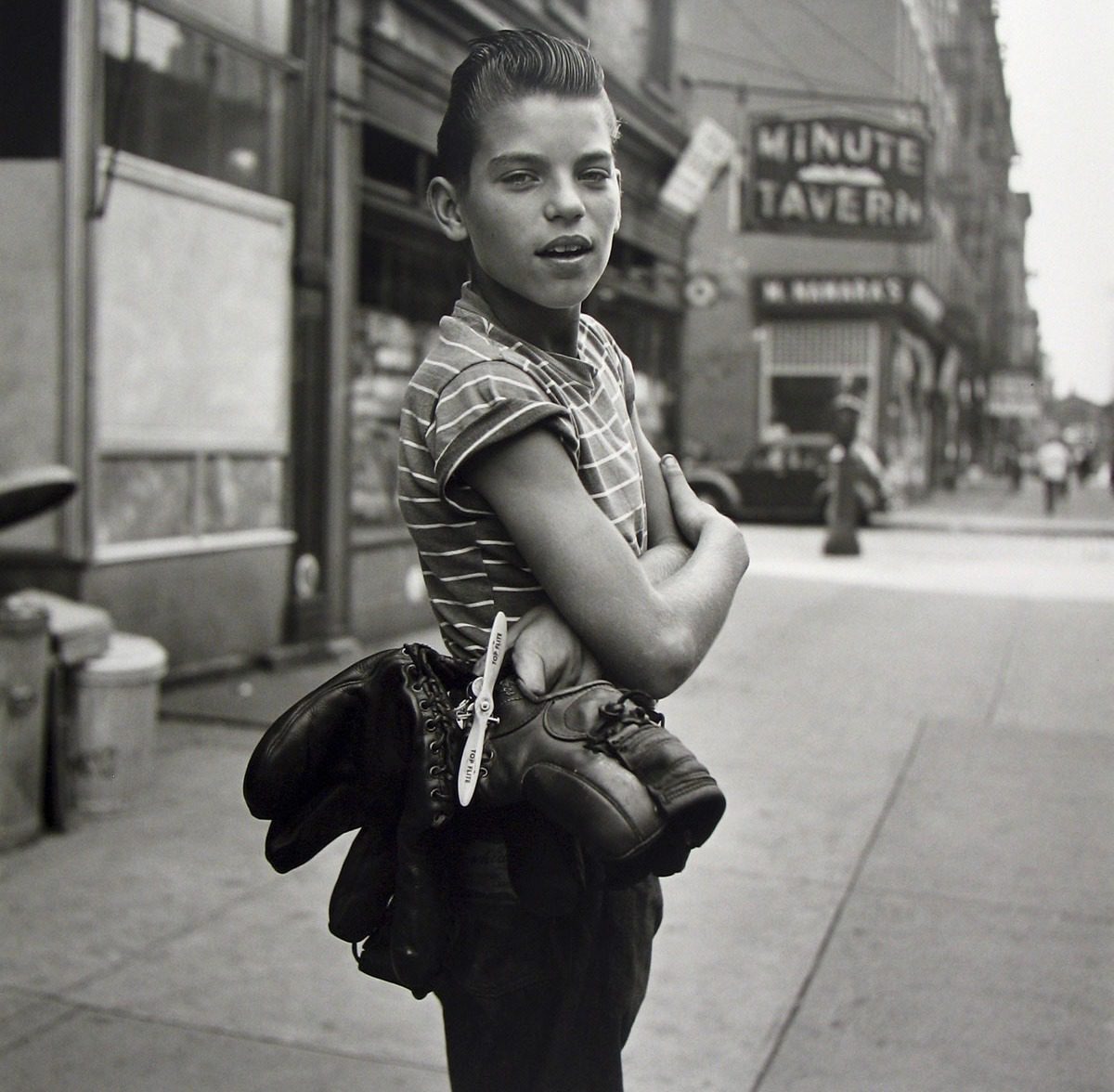
Maier’s most celebrated photographs capture the streets of Chicago and New York during the 1950s and 1960s. She was drawn not just to architecture or urban landscapes, but to people caught in authentic, everyday moments. Her lens focused on children, the elderly, day laborers, high-society residents, the unhoused, and people from diverse social backgrounds. This keen sensitivity to daily life became the hallmark of her visual style.
Maier was interested in genuine moments rather than staged compositions. A subject might simply be walking along a sidewalk, gazing into a shop window, waiting for transit, or chatting with an acquaintance—and in that split second, Maier immortalized the scene.
Self-portraits hold a unique place in her oeuvre. Vivian frequently captured her reflection in mirrors, storefront windows, polished metal surfaces, and other urban glass. At other times, only her elongated shadow appeared in the frame. These photographs are especially compelling given her private nature: while she documented thousands of strangers, she simultaneously left behind a striking visual record of her own presence in the world.
The sheer scale of the archive is another reason her story captivated the photographic community. It encompasses more than 100,000 negatives. Nor was it limited to film: the collection features vintage cameras, prints, documents, newspaper clippings, audio recordings on magnetic tape, and an assortment of personal keepsakes.
How Were Vivian Maier’s Photographs Discovered?
The discovery of Vivian Maier’s work began during her lifetime, though without her knowledge. In 2007, the contents of a delinquent storage locker she had rented were auctioned off. Buyers included John Maloof, Ron Slattery, and Randy Prow. Maloof purchased a large portion of the lots, initially unaware of the treasure trove he had acquired. As he began sorting through boxes bearing the name “Vivian Maier,” he found almost no traces of her background. It was only after spotting a brief obituary in the Chicago Tribune that Maloof launched an exhaustive investigation into her life and art.
The first scans of Maier’s work surfaced online in 2008, initially attracting modest interest. Everything changed in 2009, when Maloof posted a curated selection to Flickr. The images went viral almost instantly. What followed was one of the most astonishing posthumous breakthroughs in the history of art: a photographer who spent decades shooting in total secrecy suddenly became an international sensation.
The Documentary Film
Maier’s life became the focus of the documentary Finding Vivian Maier, co-directed by John Maloof and Charlie Siskel. The film explores not only her artistic legacy but also the enigma of who she was as a person. It features interviews with those who crossed paths with Maier throughout her life, including grown children from the families where she worked as a nanny.
The documentary earned widespread acclaim and received an Academy Award nomination for Best Documentary Feature at the 87th Oscars.
Public and scholarly interest in Maier has continued to expand. In 2017, the University of Chicago acquired a significant collection of her vintage prints, and in 2019, the university opened the John Maloof Collection to researchers worldwide.
Why Did Vivian Maier Become an Icon of World Photography?
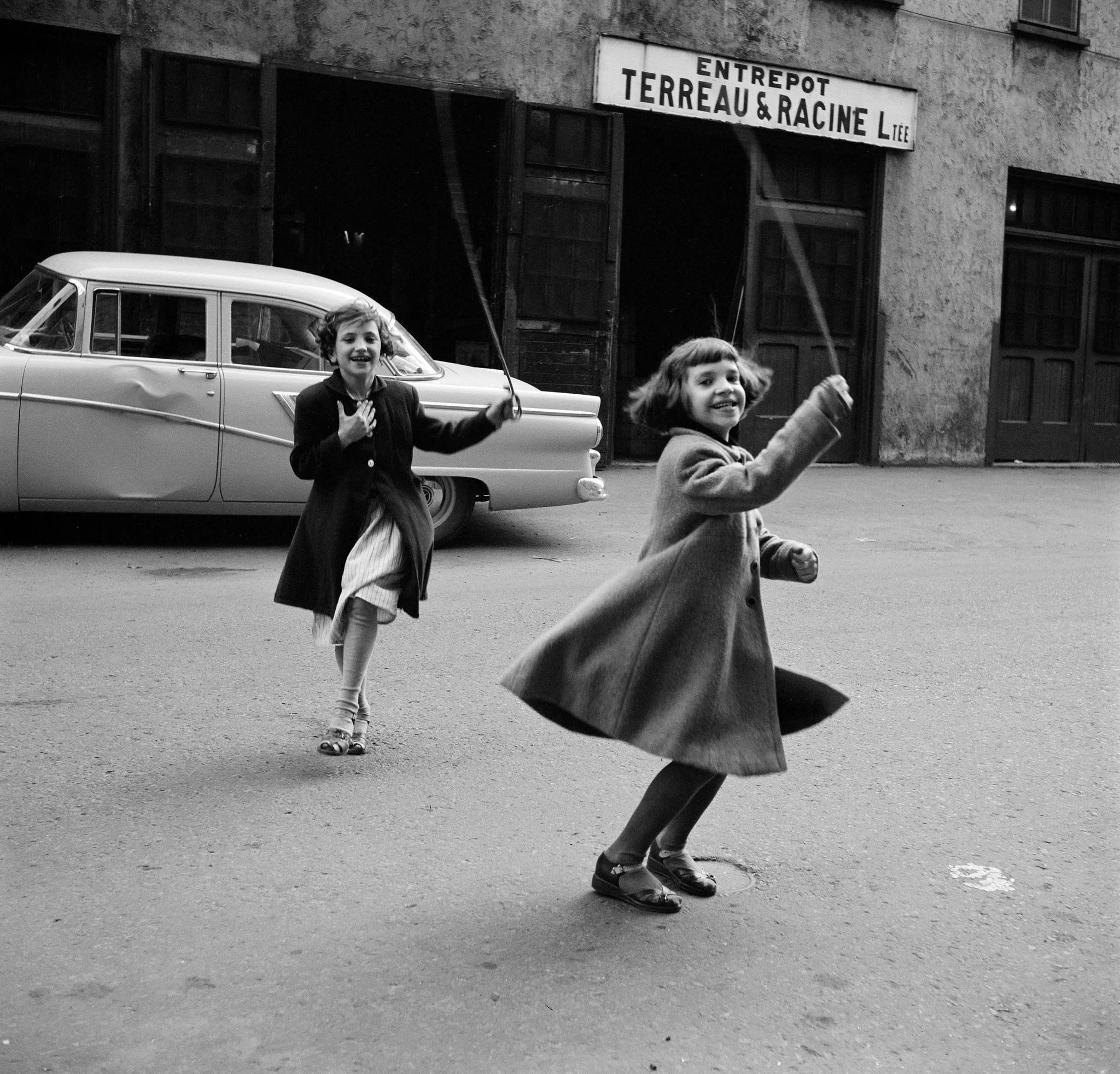
Vivian Maier’s phenomenon lies far beyond the sheer volume of her output. Her imagery offers an authentic window into mid-20th-century Chicago and New York. In her frames, she preserved those often overlooked by mainstream history: ordinary pedestrians, children, laborers, the elderly, and dwellers of marginalized neighborhoods. Maier never relied on historic spectacles—she uncovered drama in the fabric of everyday life.
That is why her body of work is now recognized as an essential chapter in the history of American street photography. Her legacy illustrates the immense value of a visionary who spent decades observing, capturing, and safeguarding the world around her. The ultimate paradox of her story is that Vivian Maier found global fame only after her passing. In life, she was a quiet nanny with a camera slung around her neck, packing away negatives into cardboard boxes. In death, those very boxes revealed a master whose vision now resonates far beyond the streets of Chicago.