

Graceland Cemetery is one of the most storied historic landmarks in the United States. Nestled on Chicago’s North Side and established in 1860, it transcends its role as a burial ground, serving as a stunning landscape that rivals the city’s finest botanical gardens. Spanning over 121 acres, Graceland is more than just a final resting place for legendary figures; it is a vital piece of architectural and cultural heritage. The cemetery stands as a symbol of an era when burial spaces evolved from utilitarian plots into masterfully designed landscape ensembles, reflecting a philosophy where memory, art, and nature intertwine. Read more on chicagovski.
The Founding
Chicago’s earliest municipal cemeteries emerged in the 1840s on the land that now forms the southern edge of Lincoln Park. However, the city’s explosive growth quickly outpaced these early sites. By the late 1850s, these burial grounds were seen as prime real estate for urban development—and as significant public health hazards. Medical theories of the time linked urban cemeteries to the spread of disease. Consequently, in 1859, the city banned further burials at the old sites and began the massive task of exhuming and relocating remains to newer necropolises. Graceland Cemetery was born from this necessity, designed to provide a serene, permanent space that combined memorialization with public recreation.
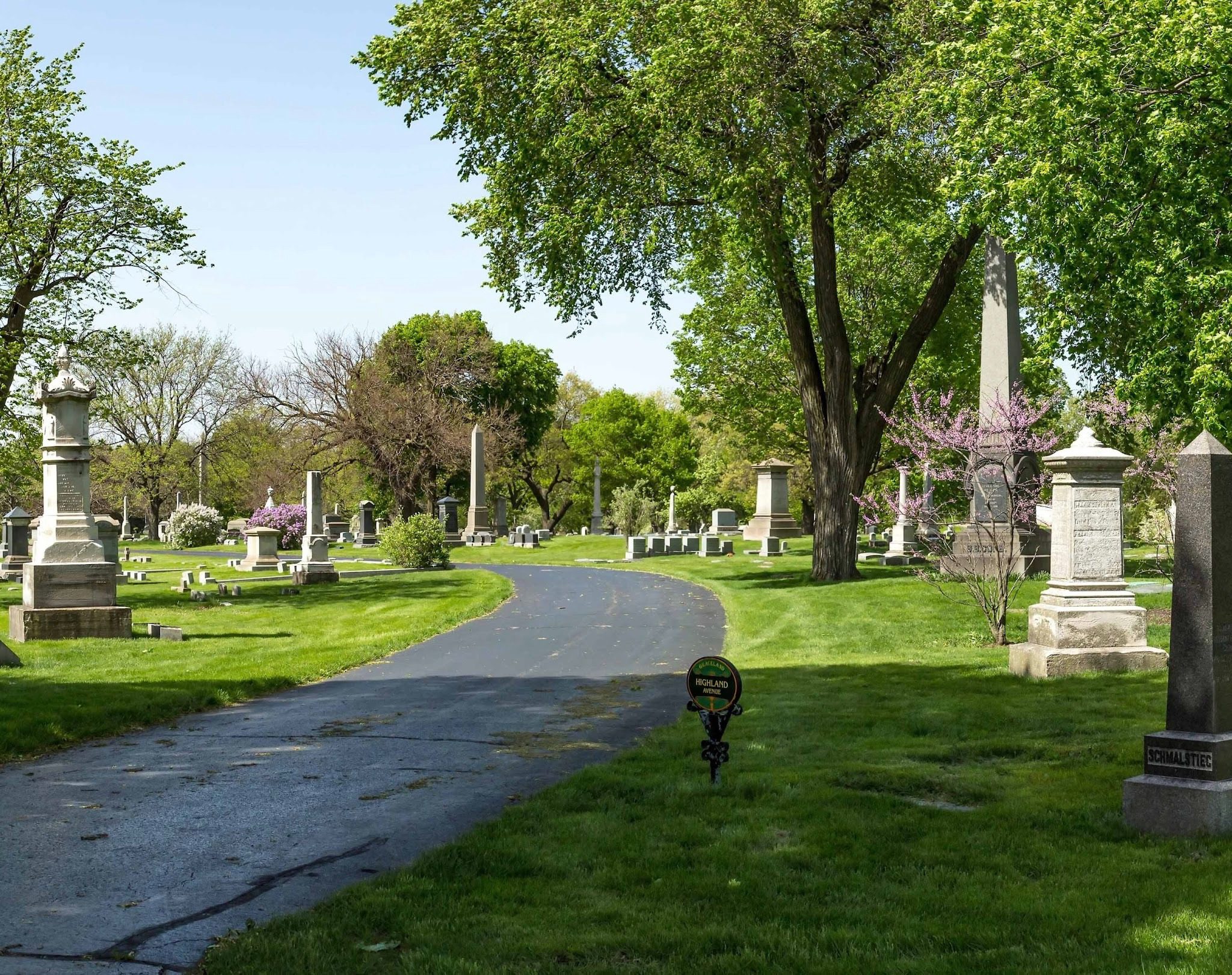
The visionary behind the project was American businessman Thomas Bryan. His motivation was deeply personal; after the loss of his son, he found the state of Chicago’s existing urban graveyards appalling. Bryan set out to create a dignified sanctuary far removed from the city’s noise and industrial bustle. Unlike traditional, cramped graveyards, his vision followed a new model: a picturesque landscape featuring winding paths, tranquil lakes, lush groves, and expansive vistas. This “park-like” approach allowed visitors to honor the deceased while finding peace in a beautiful, natural setting.
The initial 80-acre plot was designed by landscape architect Swain Nelson. Over the years, other prominent figures contributed to its development, including William Butler Ogden, Sidney Sawyer, and the renowned painter George Peter Alexander Healy. In the 1870s, the grounds were significantly enhanced by Horace Cleveland, who introduced a system of graceful winding paths and open perspectives centered around a small lake. Later, architect Ossian Simonds further refined the grounds, emphasizing a naturalistic, prairie-inspired aesthetic.
Landscape and Architectural Concept
Graceland is a quintessential example of the “rural cemetery” movement, a 19th-century design trend that sought to replace neglected urban churchyards with park-like environments. The grounds function as a massive arboretum, home to over 2,000 trees—a status that has earned it official certification. Visitors wander through a masterfully curated landscape centered around Lake Willowmere, where nature and artifice meet in perfect harmony.
The cemetery’s architectural value is unmatched. Many of its monuments and mausoleums were designed by the titans of American architecture. Among them are works by Louis Sullivan, a pioneer of modern design, who ironically is also buried on the grounds he helped adorn.
Famous Landmarks and Monuments
Often referred to as the “Cemetery of Architects,” Graceland serves as an outdoor museum of Chicago’s social and industrial history. The memorials here were crafted by leading architects of various eras, turning the grounds into a gallery of American achievement. Beyond the architects themselves, the cemetery is the final resting place for the entrepreneurs, politicians, athletes, and social reformers who shaped Chicago in the 19th and 20th centuries.
Some of the most notable architectural landmarks include:
- The Getty Tomb and the Martin Ryerson Mausoleum, designed by Louis Sullivan. These structures stand as masterpieces of innovative design and deep symbolism.
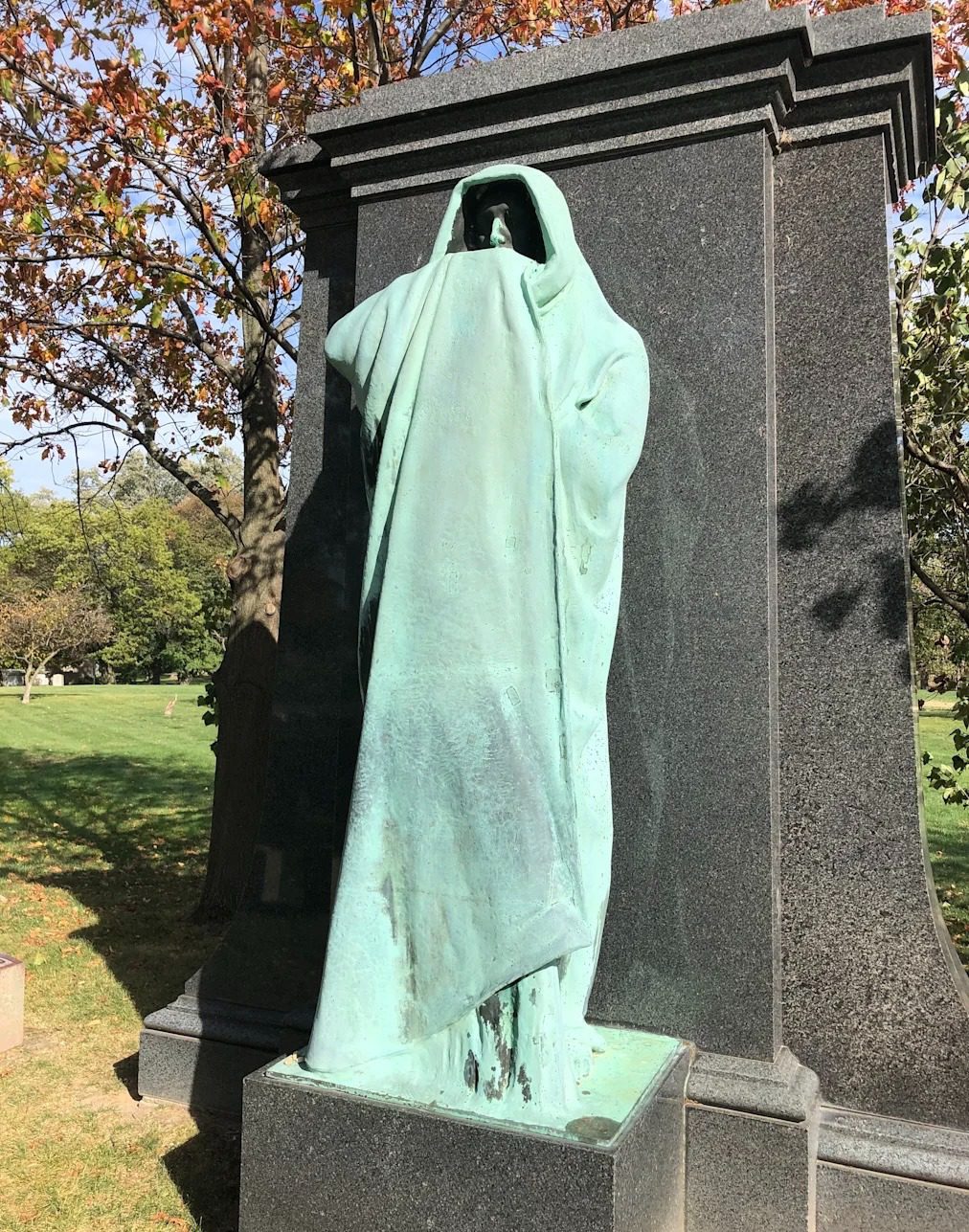
- Lorado Taft’s “Eternal Silence,” a haunting bronze figure that has become the cemetery’s most iconic symbol, along with his formidable “The Crusader” monument.
- William Hulbert’s unique baseball-shaped monument, celebrating his role in the development of America’s national pastime.
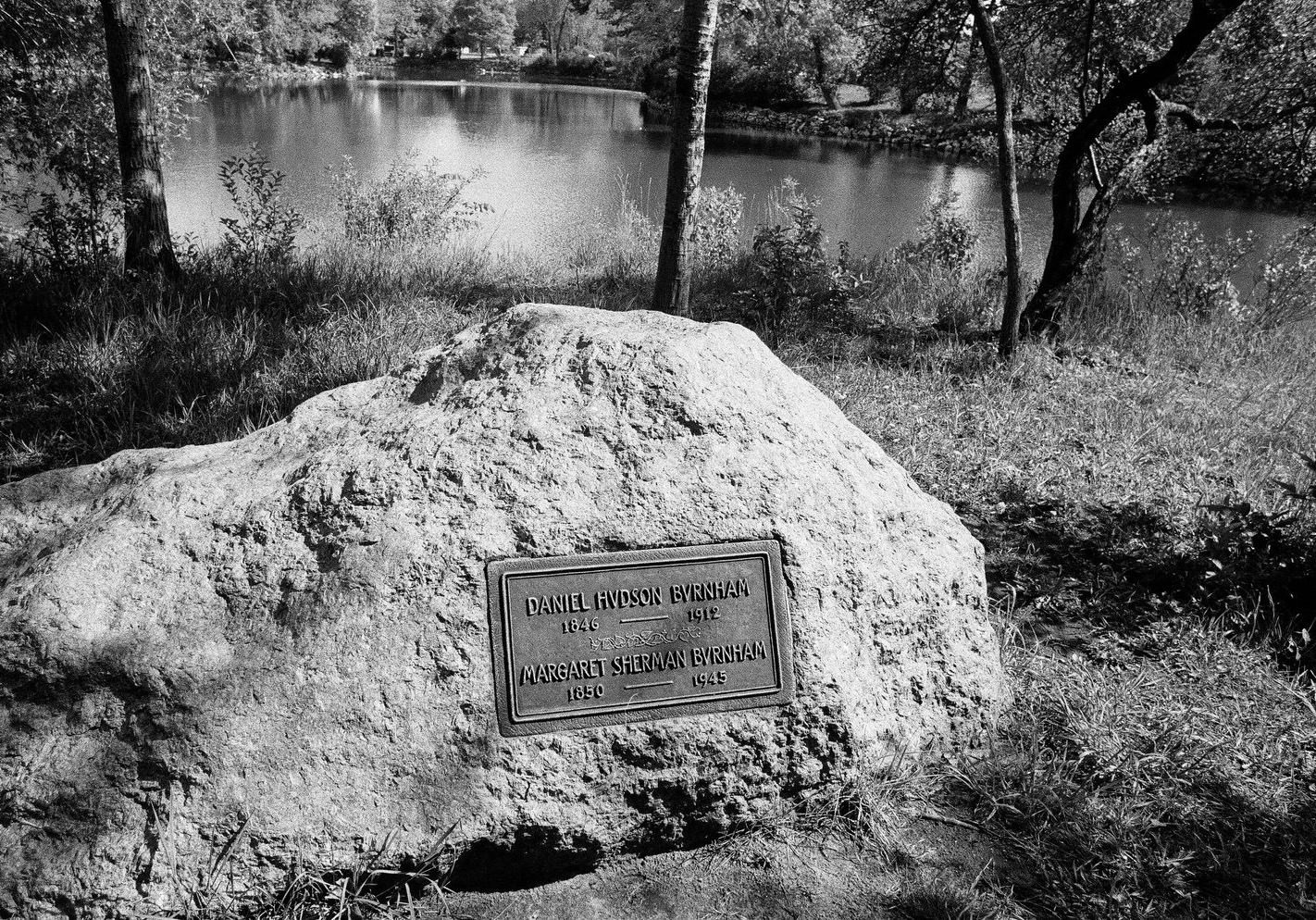
Graceland is the final home for many who literally built Chicago. Daniel Burnham, the urban planner behind the 1909 Plan of Chicago, is buried on a private island in the middle of the cemetery’s lake. Other legendary figures include:
- Marshall Field — the retail magnate whose department stores defined American shopping.
- George Pullman — the railroad innovator. His grave is famously reinforced with concrete and steel rails because his family feared his remains might be desecrated by disgruntled workers.
- Louis Sullivan — the “father of skyscrapers.”
- Ludwig Mies van der Rohe — a giant of modernist architecture.
- Ernie Banks — the legendary “Mr. Cub.”
- Jack Johnson — the first African American world heavyweight boxing champion.
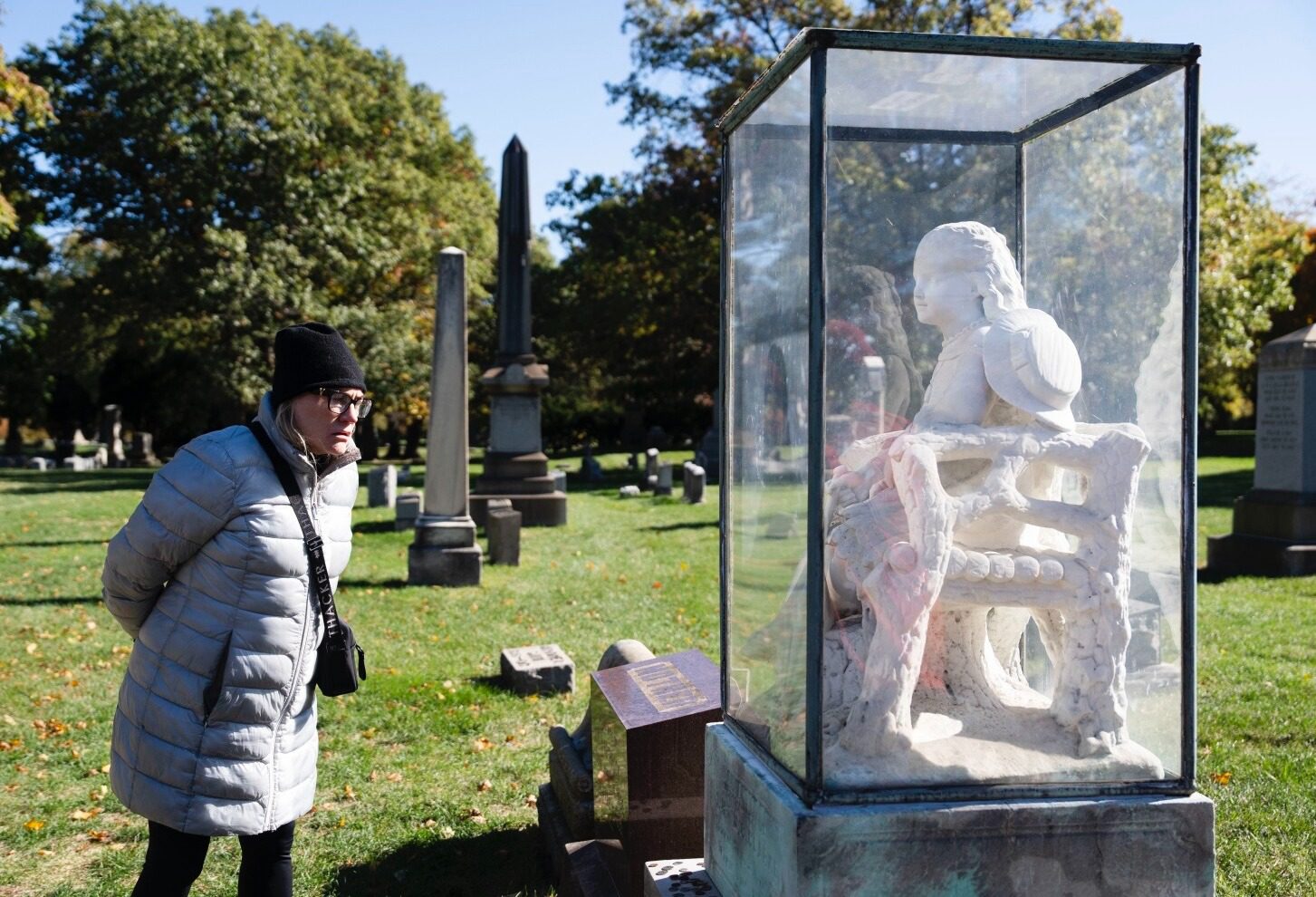
The grounds also honor figures like industrialist Philip Armour, Governor John Peter Altgeld, inventor Cyrus McCormick, and real estate developer Potter Palmer. Beyond the historic figures, Graceland is famous for its monumental sculpture. “Eternal Silence” depicts a mysterious hooded figure representing the inevitability of death. Another local legend involves the monument of Inez Clarke, a young girl whose statue is rumored to vanish from her glass case during thunderstorms—a piece of folklore that has become an inseparable part of the cemetery’s cultural mystique.
A Legacy of Inclusion and Preservation
One of Graceland’s most progressive features is that it was established without racial restrictions, making it one of Chicago’s first integrated cemeteries—a significant social milestone. Its popularity as a destination for walks was so high in the 20th century that management occasionally had to limit access to preserve its dignity as a memorial site. Over time, the public’s perception has shifted, and the site is once again celebrated as a vital historical park.
In 2001, Graceland Cemetery was added to the National Register of Historic Places, cementing its status as a vital piece of American heritage.
Today, the site is managed by the Trustees of the Graceland Cemetery Improvement Fund, a non-profit dedicated to maintaining the grounds and restoring its historic monuments. It remains an active “history park,” attracting tourists, researchers, and locals alike. Following a devastating derecho in 2020 that damaged dozens of historic trees, a massive restoration effort was launched to preserve the landscape for future generations.
Graceland Cemetery is far more than a burial ground. It is a unique intersection of history, art, and nature. It tells the story of Chicago’s evolution and serves as a lasting reminder that even a place of sorrow can become a beautiful symbol of a city’s cultural richness.