

One of the most distinguished American writers of the 20th century, Saul Bellow was a laureate of the Nobel Prize in Literature (1976) and a three-time winner of the Pulitzer Prize. His work profoundly influenced U.S. literature, revealing to readers the complex, conflicted, yet vibrant and truth-seeking human soul. Learn more about the shining star of American cinema, Jenny McCarthy. Read more at chicagovski.
Biography
Saul Bellow was born on June 10, 1915, in Lachine, Quebec, Canada. His father, Abraham Bellow, was a merchant, and his mother, Liza, was a homemaker. From an early age, young Saul immersed himself in biblical texts, the Talmud, and the classics of European literature. His mother dreamed he would become a rabbi, and this spiritual aspiration left a mark on his thinking, although he later consciously chose a secular intellectual path. When Bellow was nine, his family moved to Chicago, USA, in search of better opportunities. This city, with its stark contrasts, became the main stage for many of his future novels. He called Chicago “a brutal but genuine teacher of human nature.”
In his youth, Saul suffered a severe bout of tuberculosis, spending a long time in a hospital where he read extensively—a defining experience in his formation as a thinker and writer. He began his education at the University of Chicago but completed his studies at Northwestern University in 1937, earning a bachelor’s degree in sociology and anthropology. His fascination with the ideas of Freud, Marx, Shakespeare, and Kierkegaard became deeply rooted in his writing. After graduating, Bellow taught, wrote, and worked for a number of government and academic institutions.
During World War II, he served in the U.S. Merchant Marine, and this experience of travel and confrontation with global issues also found its way into his works. In the post-war years, he became part of America’s intellectual life, working at leading universities—including Princeton, the University of Minnesota, New York University, and later, the University of Chicago, where he taught until the end of his life.
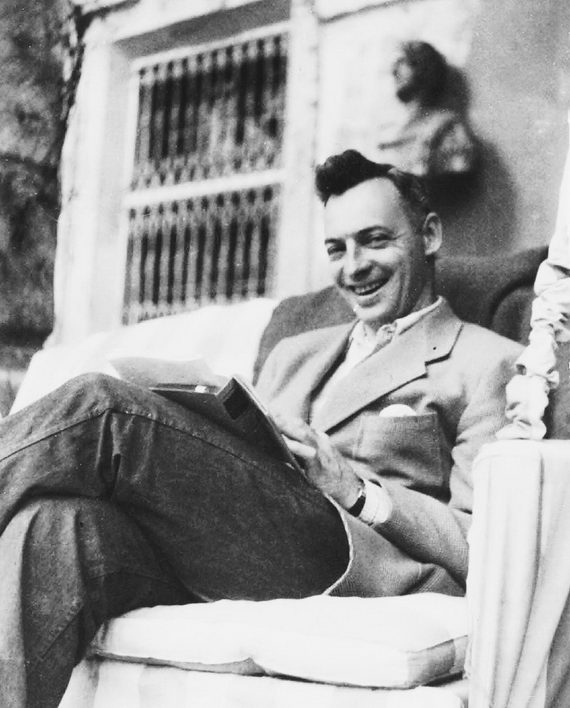
Literary Career
Saul Bellow’s writing journey began in the 1940s. His first novel, Dangling Man (1944), written in the form of a diary, portrayed a young man awaiting his draft into the army during World War II. It was a deeply personal story about the loss of meaning and identity in the modern world. Although critics received his debut favorably, true fame awaited him later.
His second novel, The Victim (1947), raised important themes of antisemitism, guilt, and interpersonal tension. Even in these early works, critics saw intellectual depth, philosophical subtext, and the author’s desire to explore human moral conflicts.
His breakthrough came with the novel The Adventures of Augie March (1953)—an energetic, multifaceted epic about a young man’s coming-of-age in America. For the first time, Bellow employed an innovative style: a dynamic, free-flowing, “conversational” prose filled with observations, irony, and internal energy. This work won the U.S. National Book Award and placed Bellow among the most prominent authors of his time. His subsequent novels only solidified his reputation as an intellectual giant of American literature:
Herzog (1964) is one of Bellow’s most iconic novels. It is a deeply personal, even autobiographical work in which the protagonist, Moses Herzog, tries to overcome a crisis by writing letters to friends, enemies, philosophers, and politicians. The novel became a bestseller in the U.S., went through numerous reprints, and won a second National Book Award. Herzog is the image of a modern intellectual, disillusioned with the world but still thirsty for truth.
Mr. Sammler’s Planet (1970) is a philosophical novel about old and new values in a rapidly changing world. The main character is an elderly Jewish intellectual, a Holocaust survivor, who now observes the moral disorientation of 1960s New York. It is a profound narrative about the internal conflict between old moral principles and a new cultural reality. The novel received a third National Book Award—an unprecedented recognition in the history of American literature.
Humboldt’s Gift (1975) is a novel inspired by Bellow’s friendship with the poet Delmore Schwartz. Through the characters of the poet Humboldt and his friend Charlie, Bellow explores how commercialized America treats culture, talent, and the creative individual. It is both a tragicomedy and a philosophical treatise on the life of an artist. For this work, Bellow was awarded the Pulitzer Prize, and the following year, the Nobel Prize in Literature.
In the 1980s and 1990s, Bellow continued to write, though less intensively. His last novel, Ravelstein (2000), became a kind of farewell to his readers. In it, Bellow depicted his close friend, the philosopher Allan Bloom, who was battling an illness. The book is written with tenderness, humor, and deep humanity.
The Nobel Prize
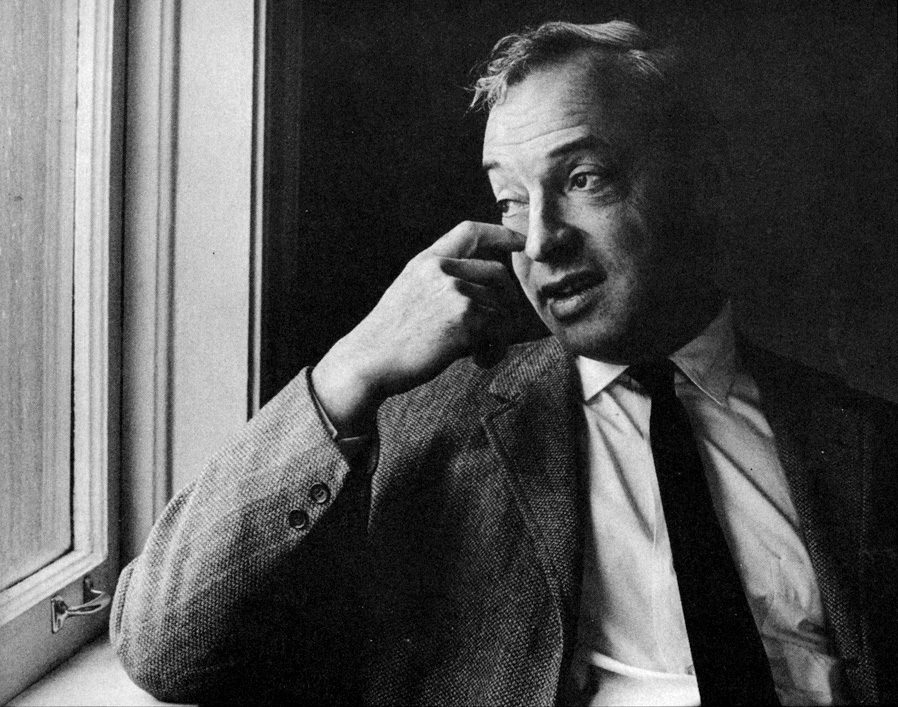
In 1976, Saul Bellow was awarded the Nobel Prize in Literature, becoming the sixth American writer to receive this most prestigious literary honor. The Swedish Academy’s citation praised his work for its “subtle combination of multifaceted narrative, deep social analysis, and sophisticated spiritual irony,” which had become characteristic features of his writing. This decision was not a surprise to the literary world; since the mid-1960s, Bellow had been considered the leading American contender for the prize. By the time of the award, he already had a significant number of acclaimed novels, numerous prestigious awards, and recognition in both the U.S. and Europe. His works had been translated into many languages and were actively discussed by critics, philosophers, and the reading public. In his Nobel lecture, delivered on December 12, 1976, in Stockholm, Bellow reflected on the role of the writer in the modern world, the crisis of culture, dehumanization, technological pressure, and the need to preserve dignity and inner freedom.
The prize was not only a recognition of Bellow’s personal achievements but also a symbolic turning point in the literary canon: it confirmed that American prose could not only entertain but also think—deeply, ironically, painfully, and intellectually. Saul Bellow is the only writer to have received the U.S. National Book Award three times, a Pulitzer Prize, and the Nobel Prize. This unique combination is a sign of the exceptional weight of his literary voice in the 20th century.
Main Themes
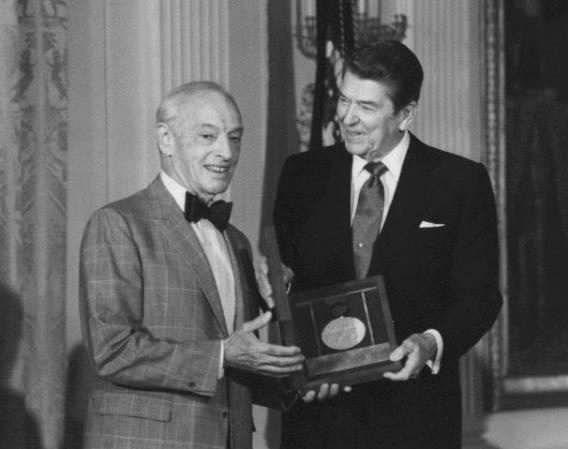
Saul Bellow’s works are intellectual journeys into the inner world of an individual caught at the crossroads of eras. His novels are not just stories about personalities but profound philosophical reflections on the fate of the intellectual in a modern, often absurd world. Bellow’s heroes—sometimes professors, sometimes writers, sometimes lonely thinkers—engage in a dialogue with a reality that constantly challenges their understanding of themselves and others.
One of the leading themes of his work is the crisis of identity in an urbanized, secular society. In a world where moral guideposts are disappearing, his characters—bearers of old cultural, religious, or humanistic ideals—are forced to search for a new foundation for life. Their thinking is deep, ironic, sometimes bewildered, but never superficial. Bellow often gives the reader access to an inner monologue that is both an intimate confession and a social commentary.
Jewish identity is a constant presence in his prose—not merely as a religious phenomenon, but as a way of thinking, a form of cultural heritage, and a source of inner ethics and humor. Bellow subtly, without pathos or stereotypes, explores the experience of the Jewish intellectual in America.
Also, learn about the legend of the Chicago theater scene — Anthony Rapp.